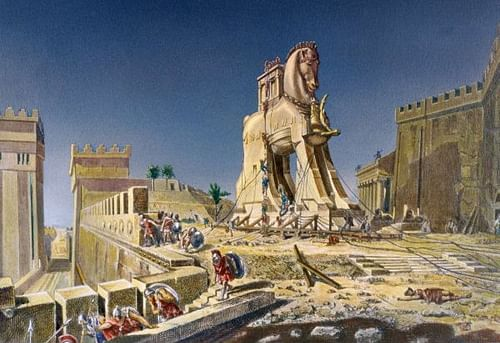
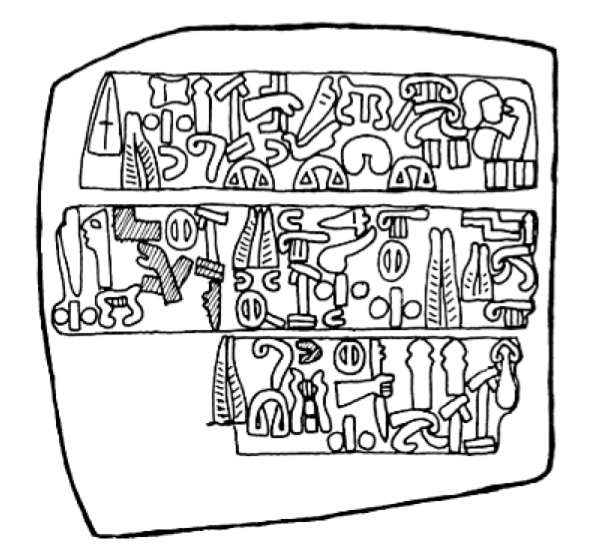
Decipherment

Day 7: Linear Orientation

Dr. Andrew M. Byrd

Review: Types of Writing Systems

Review

With your neighbor:

  • What is the difference between a logographic and phonographic writing system?
  • What are the different types of writings systems?

Exercise: What Type of Writing System is This?

  • As a review, we’re going to have you identify the type of writing system given.
  • We’ll look at:
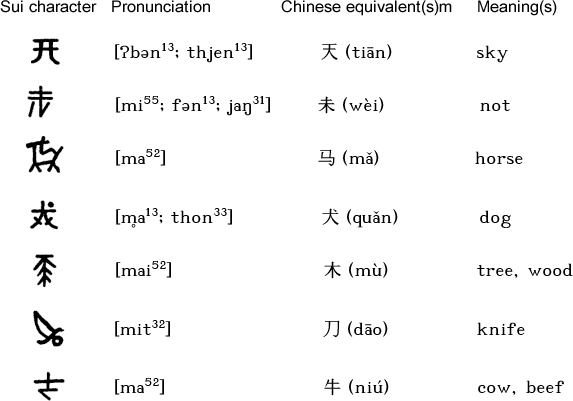
    • Sui
    • Nabataean
    • Mandombe

Sui

  • Sui is a member of the Kam-Sui branch of the Tai language family.

    • It is spoken mainly in Guizhou province in southern China, and also in northern Vietnam.

    • In 2007 there were about 300,000 speakers
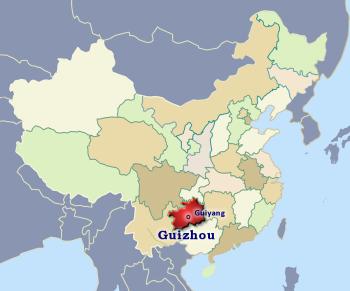
Guizhou Province

Sui

Guizhou

Sui
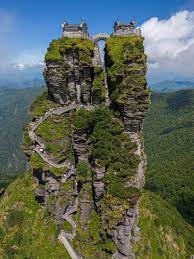
Guizhou Province

Sui Text
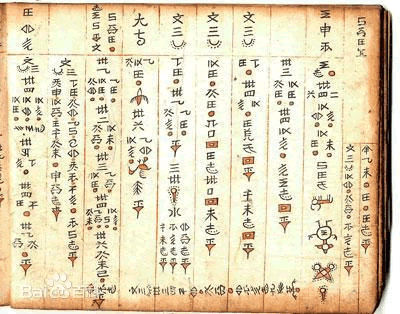
Sui

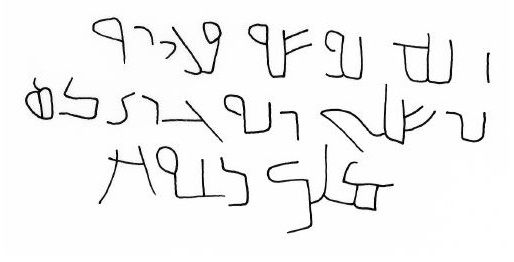
Nabataean

  • Nabataean is a variety of Western Aramaic that was spoken in and the city of Petra, along the east bank of the Jordan River and on the Sinai Peninsula between about the 3rd century BC and the 4th century AD.

  • It developed from Imperial Aramaic, and was heavily influenced by Arabic, especially by the 4th century AD.

Nabataean

Nabataean Kingdom

Nabataean

Petra

Nabataean

Petra

Nabataean

Petra

Mandombe

  • The Mandombe alphabet was devised in 1978 by David Wabeladio Payi from the Democratic Republic of the Congo (DRC).

  • It was apparently revealed in a dream to Simon Kimbangu, the prophet of the Kimbanguist Church.

  • It is based on two shapes thought of as sacred that look like 5 and 2. It is intended to write the national languages of the Congo: Kikongo, Lingala, Tshiluba and Swahili.

Mandombe

DRC

Mandombe

Simon Kimbangu

Activity Instructions

  • With your neighbor, examine the three writing systems

  • Identify the writing type. What clues give it away?

  • Close your laptops; put away those phones!

Sui Text

Sui

Sui

Nabataean

Nabataean Text

Transcription: dnh npšw phrw br šly rbw gdymt mlk tnwh

Translation: “This is the stele of Pheros Solleos, tutor of Gadimathos king of the Tannoukeens”.

Mandombe (Kikongo)
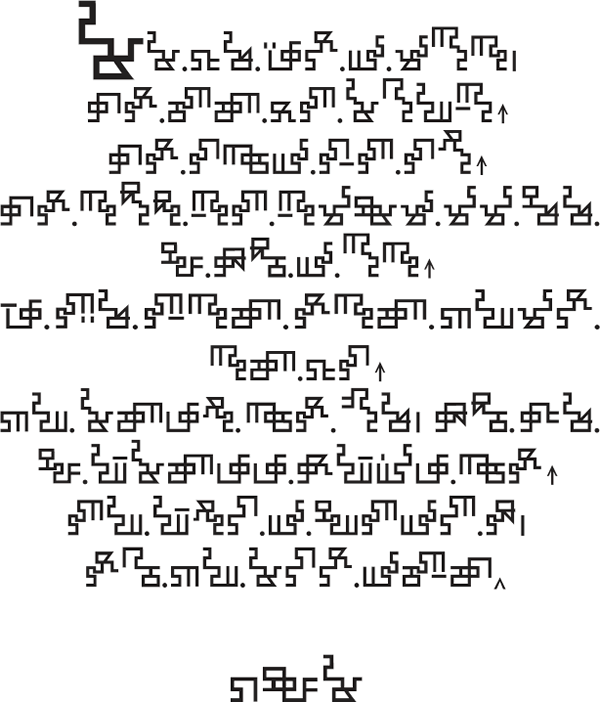
Mandombe

Mandombe (Kikongo)

Transcription: Tata eto diena mu mazulu, bika nkumbu aku yazituswa; Bika kimfumu kiaku kiza; bika luzolo luaku luavangama vava ntoto mpe bonso mu zulu; Dia kweto kwalumbu kalumbu utuvana lumbu eki; Utu yambudila mfuka zeto, bonso beto mpe tuayambudidi batuavuidi mfuka; Kutu tualani mu mpukumunu ko, kansi utu tanina munkuambi. Ingeta

Linear Orientation

For today

One final thing to discuss about writing systems: linear orientation

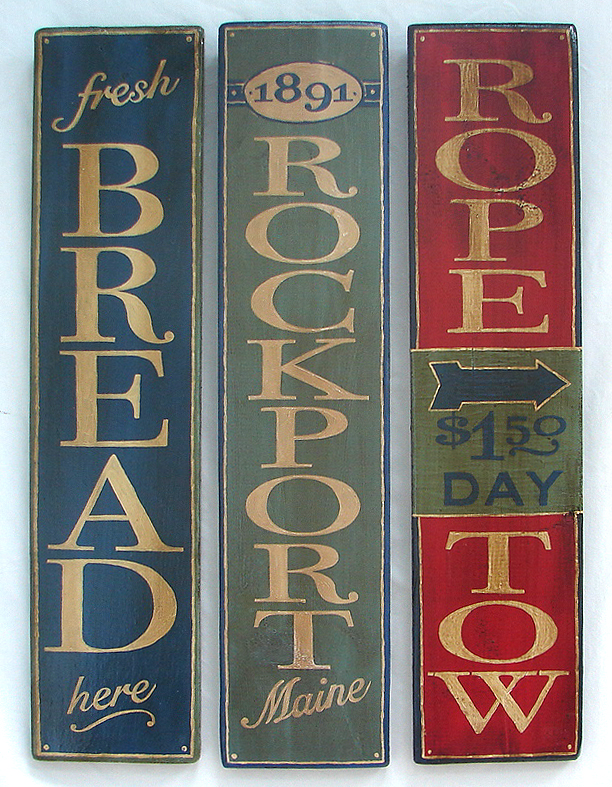
Internal structure of Writing

  • All writing has an underlying linear organization
  • By this we mean:
    • In what direction are the graphemes written?

Internal structure of Writing

  • If written horizontally:
    • right to left, left to right?
  • If written vertically:
    • top to bottom or bottom to top?

Internal structure of Writing


What is the linear organization in English?

But…

and…

Arrangement of symbols

Hebrew:
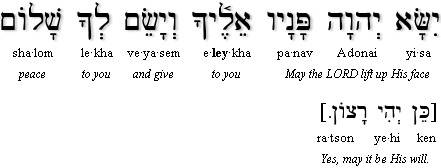
Biblical Hebrew

Arrangement of symbols – Mayan
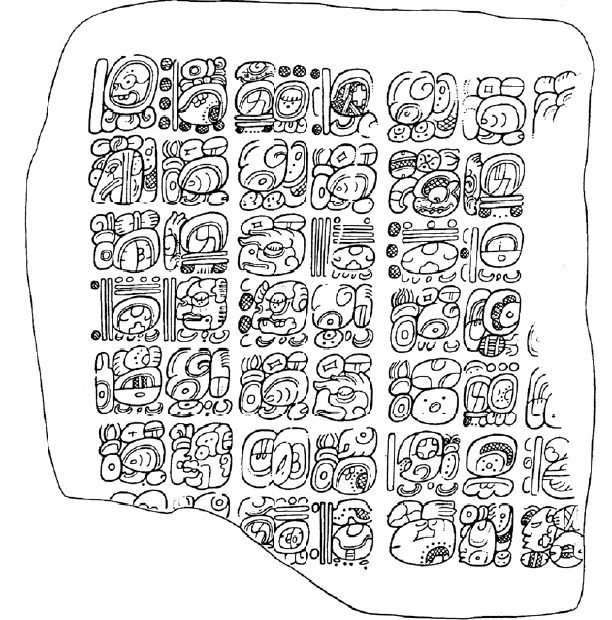
Boustrophedon

Boustrophedon Example
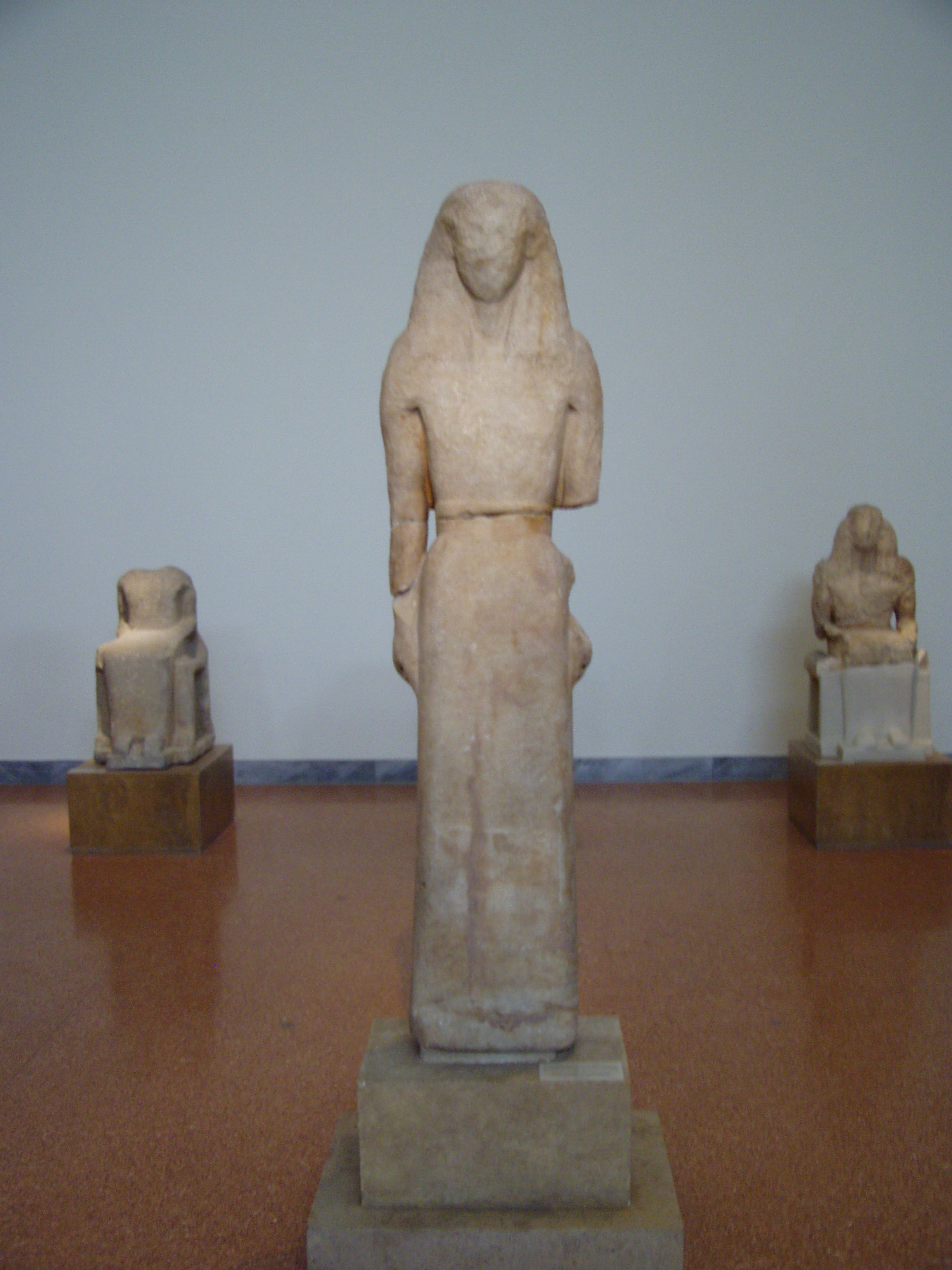
Nikandre Inscription

Nikandre Inscription

Ancient Greek example:

Nikandre Text

“Nikandre daughter of Deinodikos the Naxian outstanding amongst women, sister of Deinomenes and now wife of Phraxos, dedicated me to the far-shooting archeress”

Boustrophedon

  • Reversing the horizontal direction of writing line at the end of each line
    • “as the ox turns”
    • very common in older Western writing systems

Nikandre Text

Activity

  • Write the sentence: “Decipherment
    rocks”
    • R –> L (reverse letters!)
    • T –> B
    • B –> T
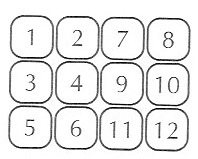
    • Like Mayan ( 1 2, 7 8; 3 4, 9 10, etc.)
    • Boustrophedon

Activity: The Steep Cliffs of Wilusa

The Luvians

Just a friendly gift

The Luvians
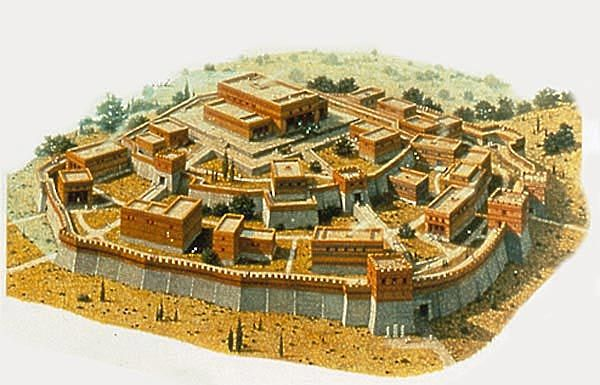
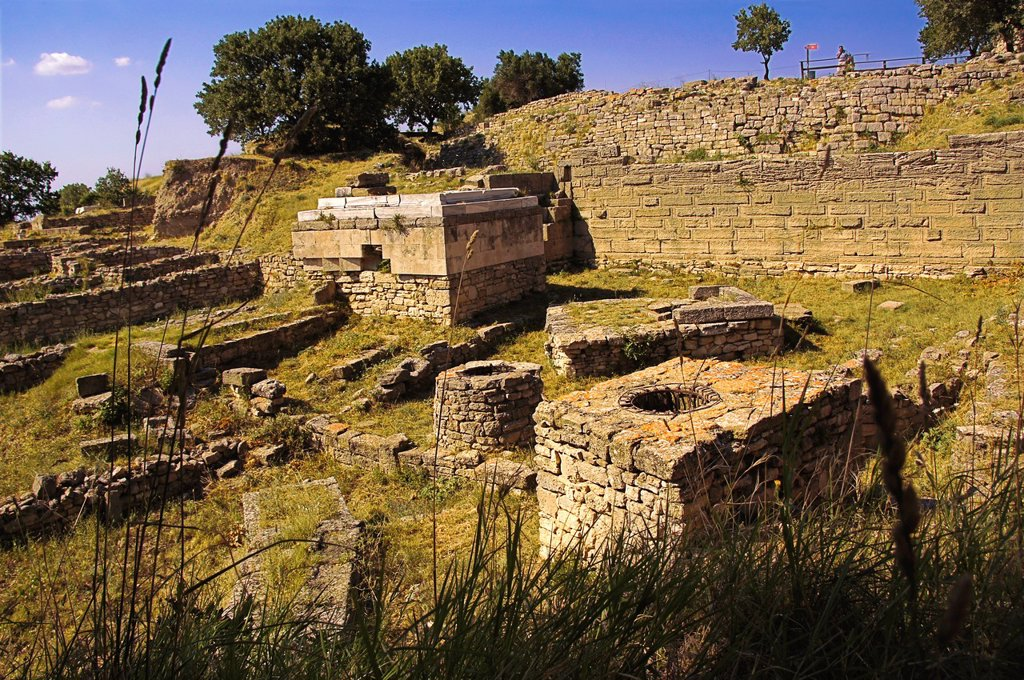
Troy

Bronze Age Cultures
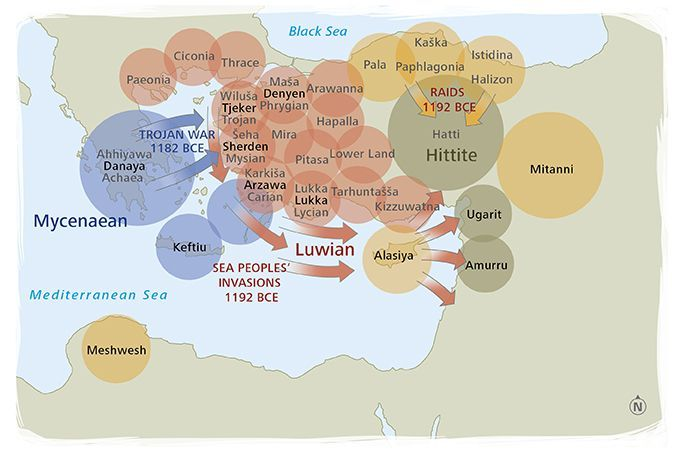
The “Sea Peoples”

Wilusa = Ilion (i.e., Ili-ad)
Sound Changes

  • All languages change how they’re pronounced over time
  • Think about:
    • which vs. witch
    • caught vs. cot
    • merry vs. mary vs. marry

Sound Changes from Luvian to Greek

  • Wilusa = Ilion

  • In Ancient Greek:

    • The sound /w/ is lost:

      • hydro- = water

      • ops ‘voice’ = vox ‘voice’

    • The sound /s/ becomes [h], and is lost between vowels

      • hex = six
    • Thus:  wiluson > iluon > Ilion

Luvian Hieroglyphs

Luvian Hieroglyphs

With your neighbor, examine the Luvian text.

What do you notice about the hieroglyphs in Luvian?

  • Are they iconic? symbolic?

What do you think the linear organization is?

Luvian Hieroglyphs Transcription

  1. ME-mi GREAT-radamisa urahilinisa CHILDnizasa imatúwaniLAND KING
  2. awa ámu BUILD-míha zaa FORTRESSharanisàza lakawanisàhawaLAND RIVER-LAND-daisà.
  3. WHICH-za iziida àtáhawa nikimasaLAND

“I (am) Uratamis, son of Urhilina, Hathamite king. I myself built this fortress (which the man of the Laka River-land made) as well as the land Nikima.”

Capitals vs. Superscripts vs. Italics

  1. ME-mi GREAT-radamisa urahilinisa CHILDnizasa imatúwaniLAND KING
  2. awa ámu BUILD-míha zaa FORTRESSharanisàza lakawanisàhawaLAND RIVER-LAND-daisà.
  3. WHICH-za iziida àtáhawa nikimasaLAND

Your task

  1. Identify the value of all signs given in the text above.

  2. Is the script logographic, phonographic, or both? What type of system specifically?

  3. What is the precise linear organization of this script? Is it always consistent or is there variation?

  4. Now write out the following nonsensical text, following the linear organization that you identified.

Line 1: BUILD-táki
Line 2: ME-mi aidasani