Decipherment
Day 2: De-cipher-ment
Warm-Up
Today’s Focus:
- Decryption vs. decipherment
- We’ll examine two types of ciphers: the Caesar and the Aristocrat
- We’ll finish with a look at our first decipherment in the class, the Behistun Inscription
Warm-Up Activity
Using the same technique we used in Monday’s class, decipher the following sentence on your handout as a Caesar +3.
What is decryption?
Today’s Reference
What is decryption?
- Decryption (aka cryptanalysis or codebreaking) is the breaking of cryptograms
What is decryption?
- Cryptogram: an encrypted message, a deliberate transformation of a readable message into an unreadable form
What is decryption?
Decryption is possible, when we:
- assume that there is a message,
- assume it’s intended to be solved,
- assume the sender & receiver share some constraints (alphabet, language, etc.).
Decryption
- There are a lot of different kinds of cryptograms, but it really boils down to two types:
Cipher: replaces letters with other letters/symbols
Code: replaces words/phrases with entries from a shared lookup system (codebook)
Decryption –> Decipherment
- This mirrors the two basic kinds of writing systems that are decipherable:
- Phonographic: characters (letters) represent sounds
- Logographic: characters represent words
Logographic

Phonographic?
Codes
What is a Code?
A code replaces words or ideas with other symbols.
- One unit → another unit
- Meaning-based substitution
What is a Code?
Encryption using codes assumes:
- Both parties share the same codebook (or a way to reference it)
- The mapping is “semantic”: words/phrases → groups*
Case study: The Zimmermann Telegram (1917)
- A secret diplomatic message sent by Germany to Mexico during World War I
- Proposed a military alliance if the United States entered the war
- Promised Mexico the return of Texas, Arizona, and New Mexico
Case study: The Zimmermann Telegram (1917)
- Intercepted by British intelligence
- Decrypted and shown to the United States government
- The Brits discovered the codebook in Afghanistan (!)
- Directly helped push the U.S. into World War I
Case study: The Zimmermann Telegram (1917)
On the first of February we intend to begin submarine warfare unrestricted. In spite of this, it is our intention to endeavor to keep neutral the United States of America.
If this attempt is not successful, we propose an alliance on the following basis with Mexico: that we shall make war together and together make peace. We shall give general financial support, and it is understood that Mexico is to reconquer the lost territory in New Mexico, Texas, and Arizona. The details are left to you for settlement . . .
…
Zimmermann (Secretary of State)
Case study: The Zimmermann Telegram (1917)

Case study: The Zimmermann Telegram (1917)

Codes –> Decipherment?
- While symbols may represent complete words in our decipherments (logographic systems)
- If an ancient script is an actual code, then decipherment is pretty much impossible
- No codebook = no decryption!
Ciphers
What Is a Cipher?
A cipher replaces letters or symbols with other letters or symbols.
The Caesar Cipher
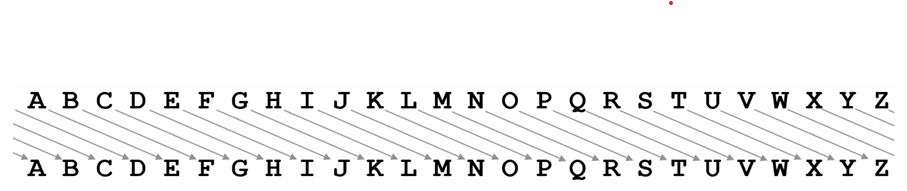
The Caesar cipher is the simplest cipher.
- Each letter is shifted by a fixed amount across the alphabet
The Caesar Cipher
Plaintext: ABCDEFGHIJKLMNOPQRSTUVWXYZ Ciphertext: EFGHIJKLMNOPQRSTUVWXYZABCD
Caesar Example: Telegram (1939)
Caesar Example: Telegram
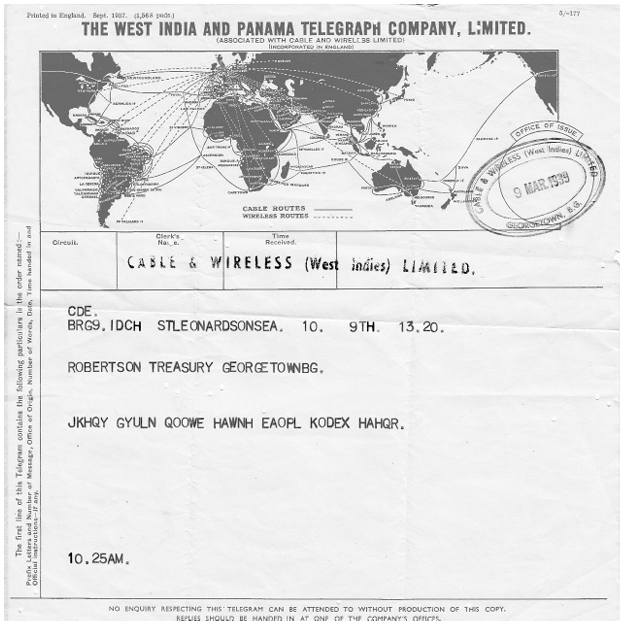
-4: NOLUC KCYPR USSAI LEARL IESTP OSHIB LELUV
Detecting a Caesar Cipher
Key idea: frequency shifting
- English has a distinctive frequency profile
- Even with the shift, the Caesar cipher keeps that profile intact
Detecting a Caesar Cipher
Detecting a Caesar Cipher
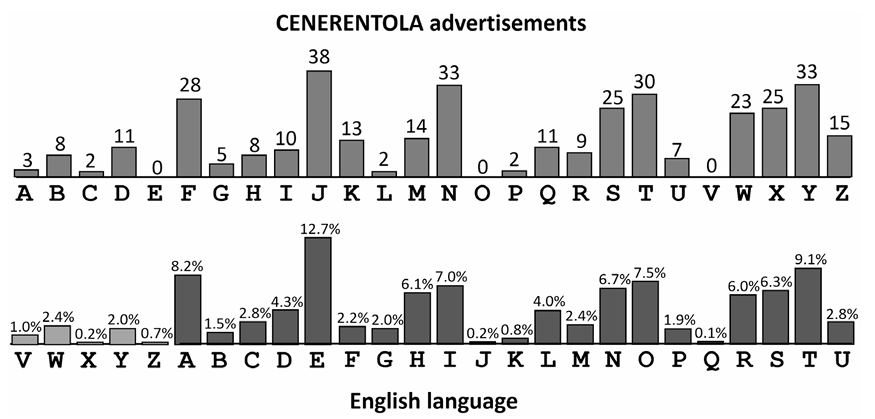
Caesar Activity: Advertisements
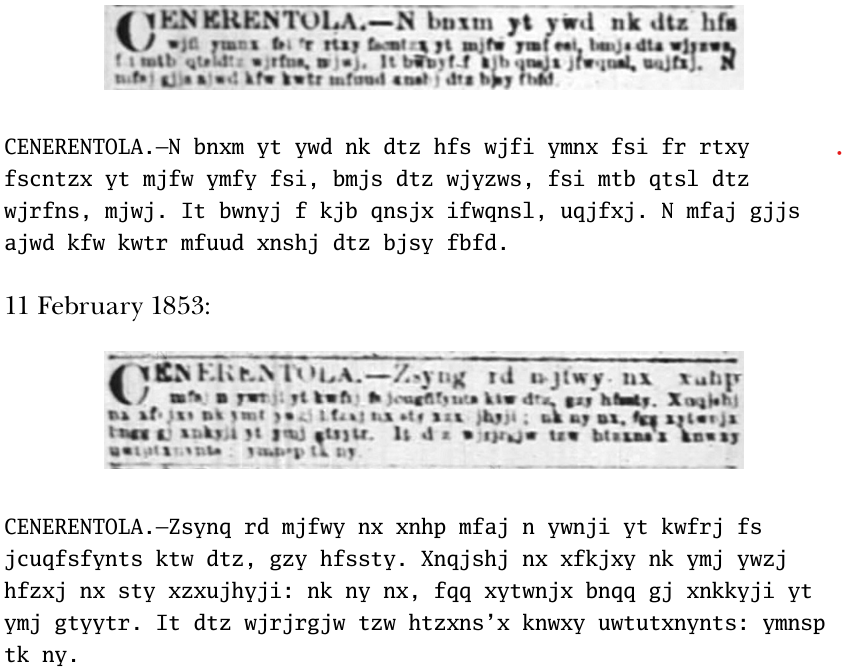
- On page one of your Day 2 Handout, there are a series of advertisements partially encrypted
- Can you decrypt the message?
** Hint: to crack the code, focus on frequency! **
Other Types of Ciphers
Can a cipher have unknown symbols?
Yes! A cipher can use:
- unfamiliar symbols,
- scrambled glyphs,
- different writing conventions,
- even mixed symbol sets.
Cipher Example: the Zodiac Killer
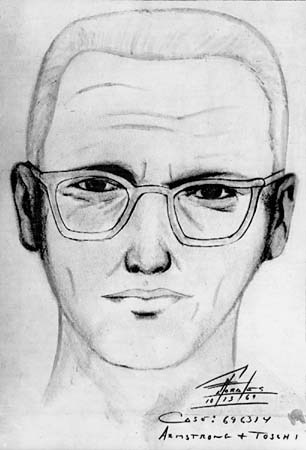
Cipher Example: the Zodiac Killer
- Serial killer who operated in Northern California in the late 1960s and early 1970s
- Killed at least five people and severely injured two
- Wrote a number of “taunting letters” to local newspapers, where “he made fun of the police and announced his intent to engage in more murders and mayhem”
- Identity still unknown
Cipher Example: the Zodiac Killer
- What makes this case interesting for codebreakers is that some of the killer’s letters contained encrypted messages.
- Altogether, four cryptograms can be attributed to the Zodiac Killer.
Cipher Example: the Zodiac Killer
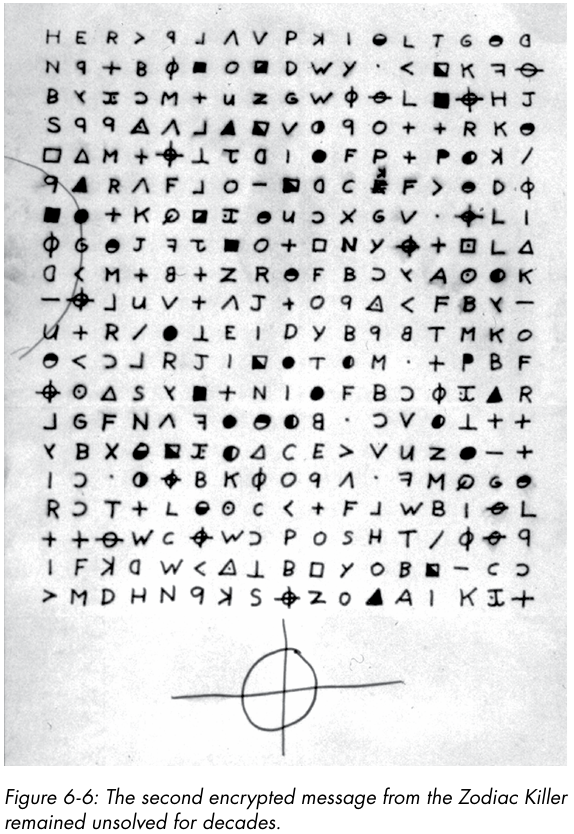
Cipher Example: the Zodiac Killer
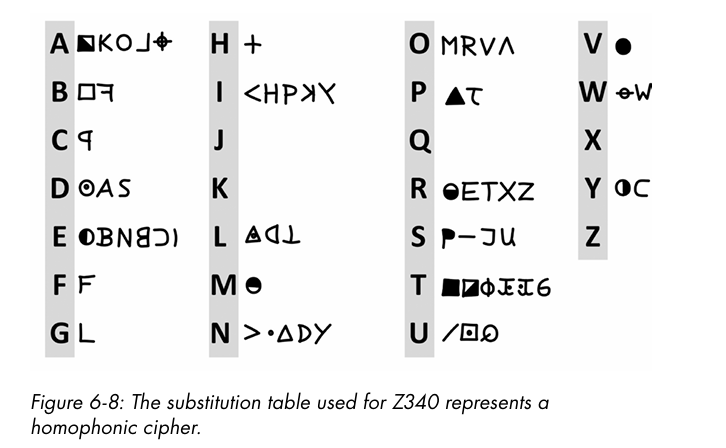
This is the second message from the Zodiac Killer, mailed on November 8, 1969 and consisting of 340 characters
Difficulties:
- funny symbols
- frequency counts not what we expect for English
Muddying up the Waters: Homophonic Cyphers
If frequency helps us identify the value of symbols (most frequent = “e”, “t”, etc.)
How might one encrypt a message to hide the expected frequencies of letters?
Muddying up the Waters: Homophonic Cyphers
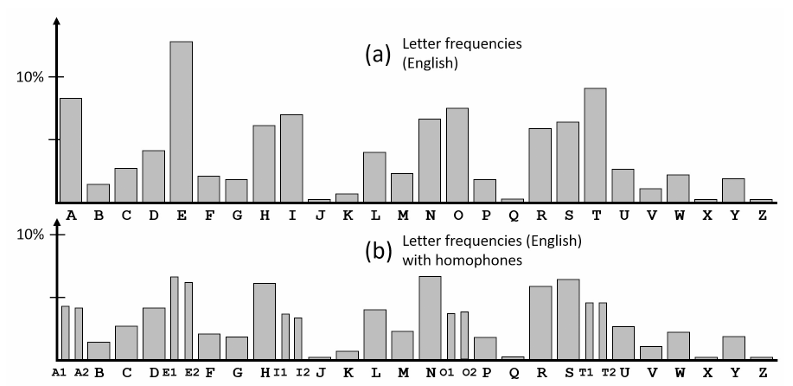
Cipher Example: the Zodiac Killer
The second Zodiac cipher was only decrypted in 2020 by a team of three experts, using computer software
- They tested no fewer than 650k solutions
Cipher Example: the Zodiac Killer
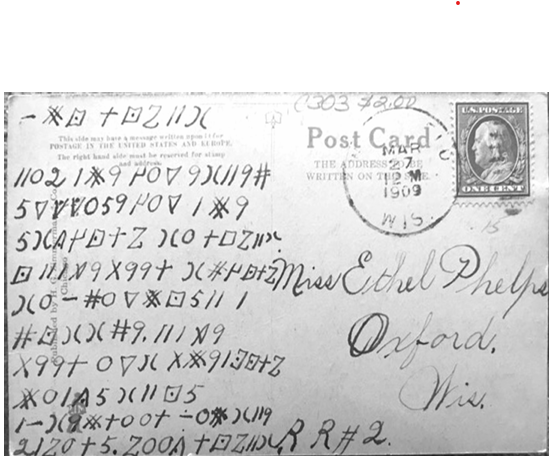
Cipher Example: the Zodiac Killer
I HOPE YOU ARE HAVING LOTS OF FUN IN TRYING TO CATCH ME THAT WASNT ME ON THE TV SHOW WHICH BRINGS UP A POINT ABOUT ME I AM NOT AFRAID OF THE GAS CHAMBER BECAUSE IT WILL SEND ME TO PARADICE ALL THE SOONER BECAUSE I NOW HAVE ENOUGH SLAVES TO WORK FOR ME WHERE EVERYONE ELSE HAS NOTHING WHEN THEY REACH PARADICE SO THEY ARE AFRAID OF DEATH I AM NOT AFRAID BECAUSE I KNOW THAT MY NEW LIFE IS DEATH LIFE WILL BE AN EASY ONE IN PARADICE
Substitution Ciphers
Caesar ciphers involve one global shift
![]()
But what if the shift is less consistent? What if the mapping is arbitrary?
Substitution Ciphers
Mapping is arbitrary nearly all of the time when using non-Roman characters
When spacing is preserved, these are called aristocrats
Aristocrats
Decoders can create a simple (temporary) substitution table:

Aristocrats
Allowing us to create a message that looks like:
ABC DCEFG FHI JBK LHM KGFKN OMPPHOK LHM JBK OGQLCDE GH DCEFG C FJRK SKKD GBLCDE GH ANHMBCOF J NCGGNK. FJRK SKKD HMG SBKJTCDE BHJQO GFCO JAGKBDHHD AHB GFK IJEHDO. EHHQ DCEFG
Aristocrats
From there, we can perform a frequency analysis.
Can we make any guesses as to what specific letters should map to?
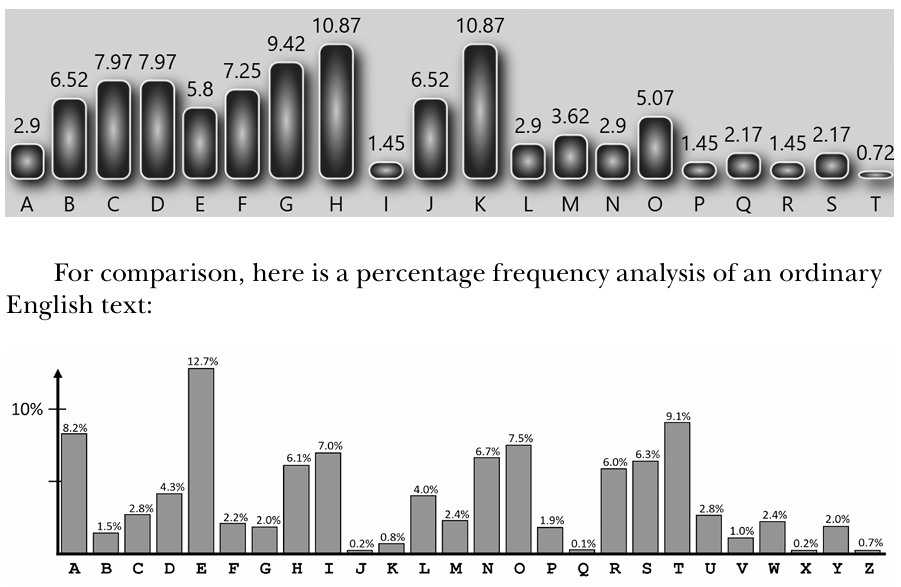
Aristocrats
Let’s use a helpful website to see what this message might mean:
You may be wondering…
Why are we talking about codes, Caesar ciphers, homophonic ciphers, and aristocrats?
In many ways, decipherment is like decrypting a cipher!
You do not know:
- the system by which the text was encoded
- how symbols map to sounds, words, or meanings
- the linguistic values for the symbols
In many ways, decipherment is like decrypting a cipher!
You do know:
- word boundaries;
- statistical structure (symbol frequency, word length);
- that it encodes a real language (sometimes this is questionable, though)
➡️ These are exactly the clues we seek to find to decipher scripts
The Behistun Inscription
Behistun
- Modern Bistin
- Old Persian Bagastana, or ‘place of the gods’
- Lies in a gorge about sixty-five miles to the west of Hamadan, Iran, along the ancient caravan route between Baghdad and Tehran.
Behistun
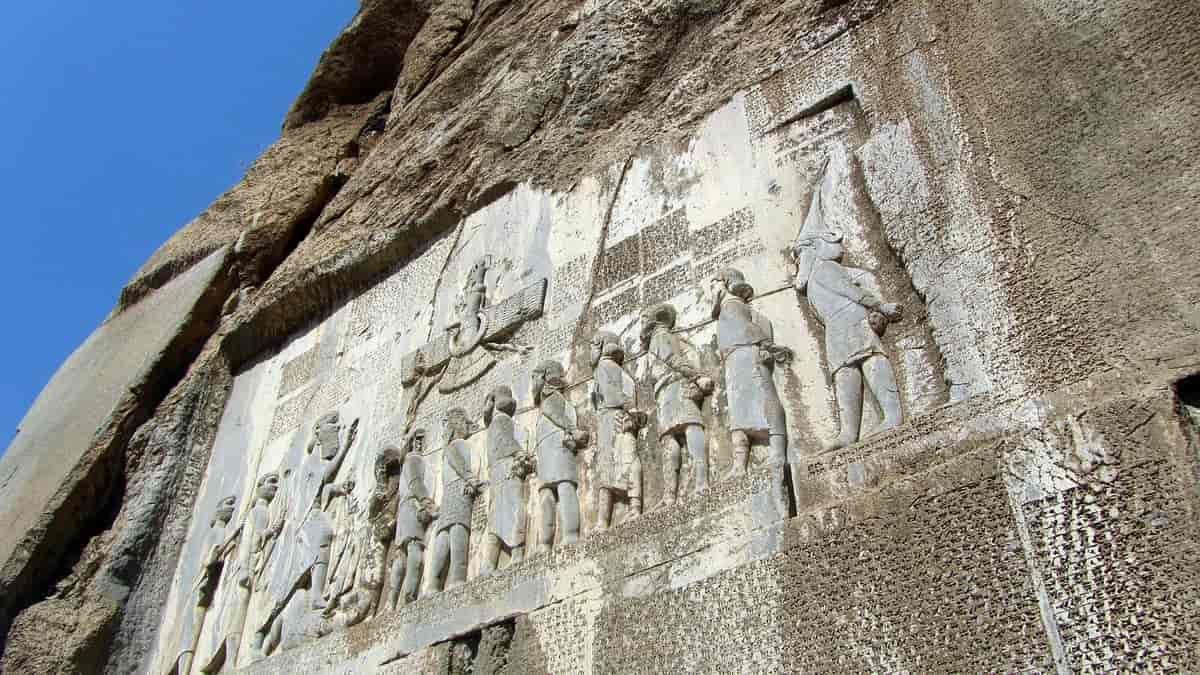
Behistun
- description from https://lrc.la.utexas.edu/eieol/aveol/70
- A trilingual inscription (Elamite, Akkadian, and Old Persian), narrating the defeat of ten rebel kings, is carved near the ancient settlement on the face of the northern cliff, about 225 feet above the ground.
- Accompanying sculptural reliefs depict the same events with the Emperor Darius I (ca. 521 - 486 BC), flanked by two attendants, standing before a line of nine captives.
Behistun
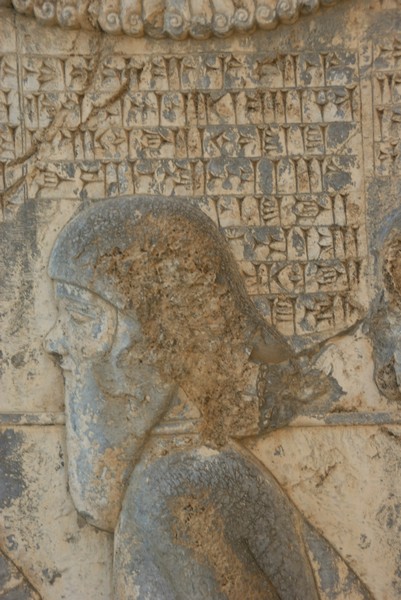
Behistun: another close-up panel
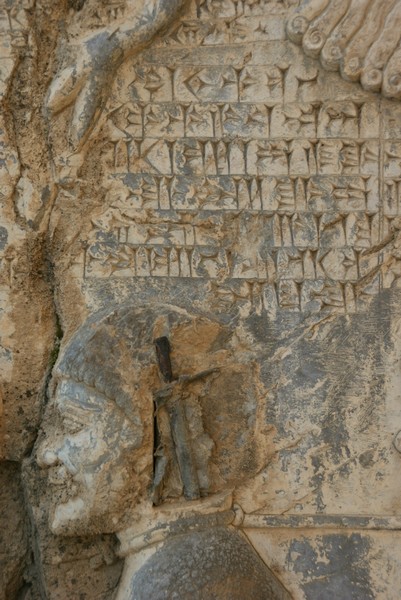
Behistun
Darius’s right foot is planted firmly on the prostrate figure of Gaumata, the tenth rebel king, while the god Ahura Mazda looks on from above.
The Old Persian inscription consists of five columns surrounded by minor reliefs depicting the persons and events described in each column.
Behistun
A trilingual monumental inscription (Old Persian + Elamite + Babylonian/Akkadian).
- multiple versions of “the same” text
Map of Scripts
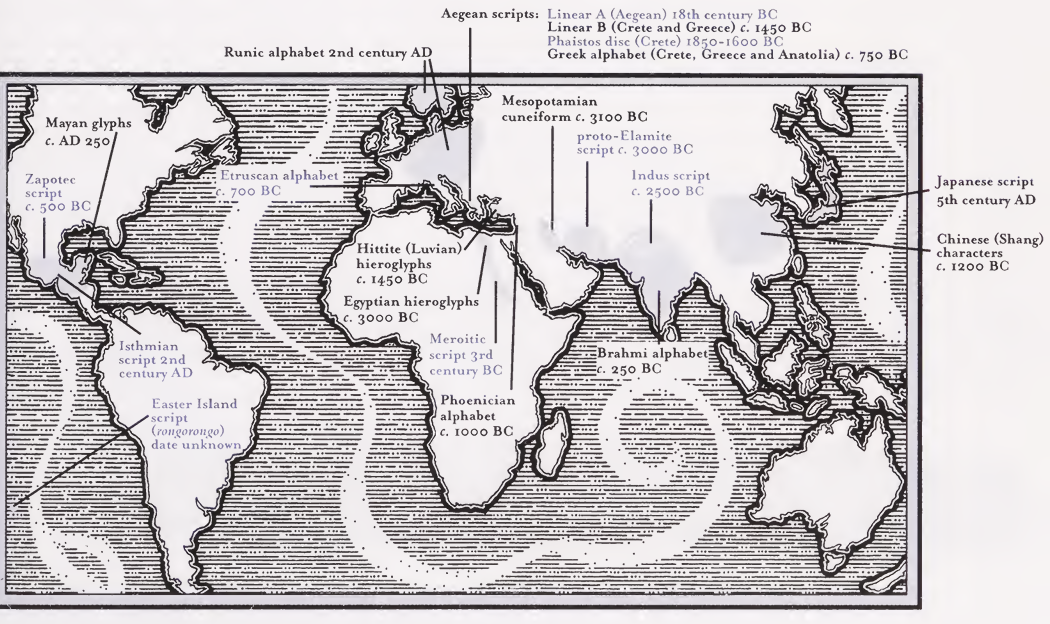
How to Decipher?
- When discovered by Europeans, they had no idea what language this was written in and the words within.
- So how can we decipher it?
Let’s Go Back to this Guy
Zodiac Killer: Message One
- The first Zodiac Killer cryptogram (Z408)
- Originally divided into three parts, each of which was sent to a different news paper.
Zodiac Killer: Message One
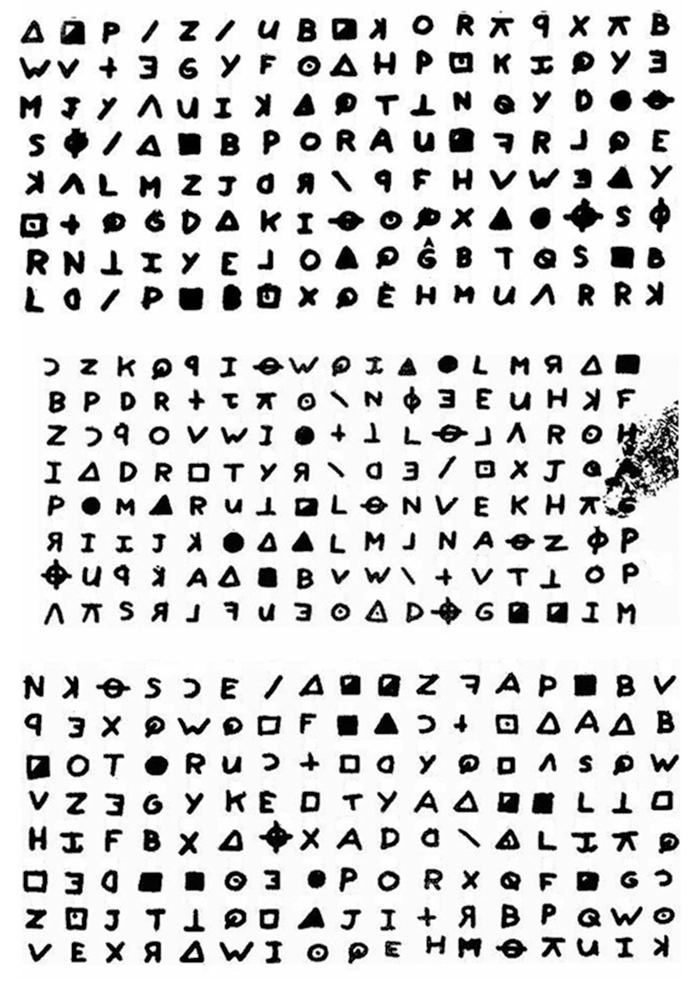
Zodiac Killer: Message One
Donald and Bettye Harden, a puzzle-loving couple living in Salinas, California, read about Z408 in a newspaper and decided to try to decipher it.
Bettye thought that the Zodiac Killer, being a serial killer, was probably a narcissist
What word do narcissists use frequently? How about homicidal narcissists?
Zodiac Killer: Message One
- She thought that the message would start with the word I, and that maybe the word KILL might appear in the text as well.
- Her guess that the first plaintext words were I LIKE KILLING was the breakthrough.
Zodiac Killer: Message One
I LIKE KILLING PEOPLE BECAUSE IT IS SO MUCH FUN IT IS MORE FUN THAN KILLING WILD GAME IN THE FORREST BECAUSE MAN IS THE MOST DANGEROUE ANAMAL OF ALL TO KILL SOMETHING GIVES ME THE MOST THRILLING EXPERENCE IT IS EVEN BETTER THAN GETTING YOUR ROCKS OFF WITH A GIRL THE BEST PART OF IT IS THAE WHEN I DIE I WILL BE REBORN IN PARADICE AND ALL THEI HAVE KILLED WILL BECOME MY SLAVES I WILL NOT GIVE YOU MY NAME BECAUSE YOU WILL TRY TO SLOI DOWN OR ATOP MY COLLECTIOG OF SLAVES FOR MY AFTERLIFE. EBEORIETEMETHHPITI
Back to Behistun
- Carsten Niebuhr (1767) brought the first complete copies of the inscription to Europe
- He recognized that there were only 42 characters in what would later be identified as Old Persian
With 42 characters, do you think that the symbols represented sounds or words?
Back to Behistun
Building on Niebuhr’s work, Friedrich Münter, Bishop of Copenhagen, began to work on the inscription
What words might narcissist kings use frequently in an inscription etched on the walls of a cliff?
Back to Behistun
- Münter hypothesized that a frequent word at the beginning of the inscription would mean “king”
- Cf. Bettye & the Zodiac killer!
- From there, scholars were able to figure out what other words mean (with the help of lining of knowledge of other languages)
Activity
Let’s see what “I am the king Darius” looks like in actual Old Persian.