Decipherment
Day 1: What is Decipherment?
Welcome
Welcome to Decipherment!

LIN 317-002 — Decipherment
Spring 2026
TR 9:30–10:45
Funkhouser B4
Welcome to Decipherment!
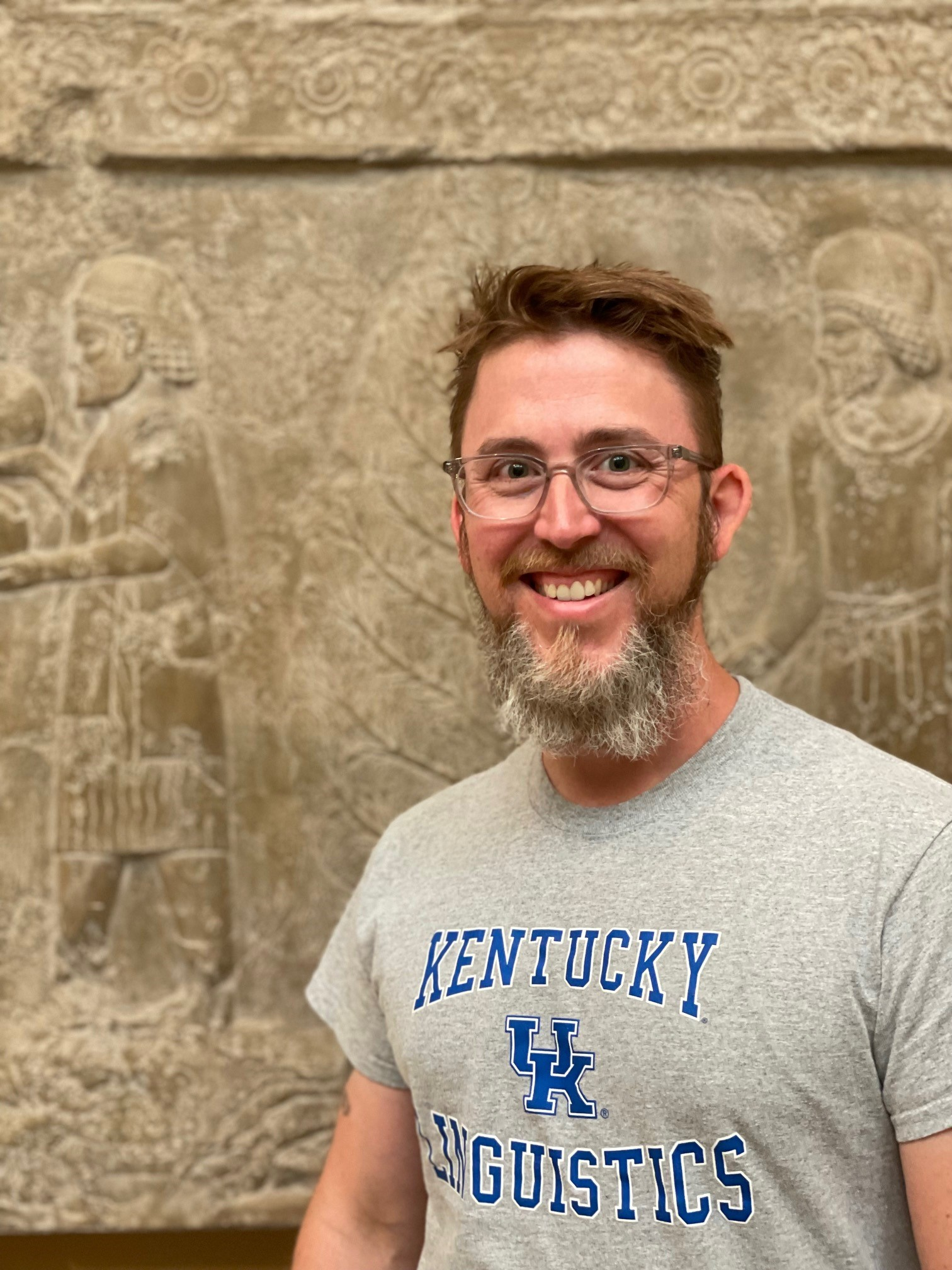 Andrew M. Byrd
Associate Professor of Linguistics
- Office: POT 1667
- Email: andrewbyrd@uky.edu
- Office hours:
- In person: Tuesdays 11:30–12:30
- Virtual: Mondays 3:15–4:15
- In person: Tuesdays 11:30–12:30
My Background:
- I am a formally trained historical linguist (Ph.D. 2010, UCLA, Indo-European Studies)

My Background:
I’ve studied roughly fifty or so languages, most of them dead:
- Latin
- Ancient Greek
- Sanskrit
- Old English
What do these languages have in common?
My Background:
My Background:
- Thinking about old problems in new ways
- Experimental Indo-European
- DERBi PIE website
- Immersive PIE novellas
Experiments
DERBi PIE

Immersive Novellas
- Immersive PIE Introduction Core Curriculum Series (Textbooks, grammar, vocabulary, and companion literature texts)
- Together with my wife (Brenna Byrd, who’s teaching a PIE class this semester), writing 5 stories in PIE
- This has never been tried before!
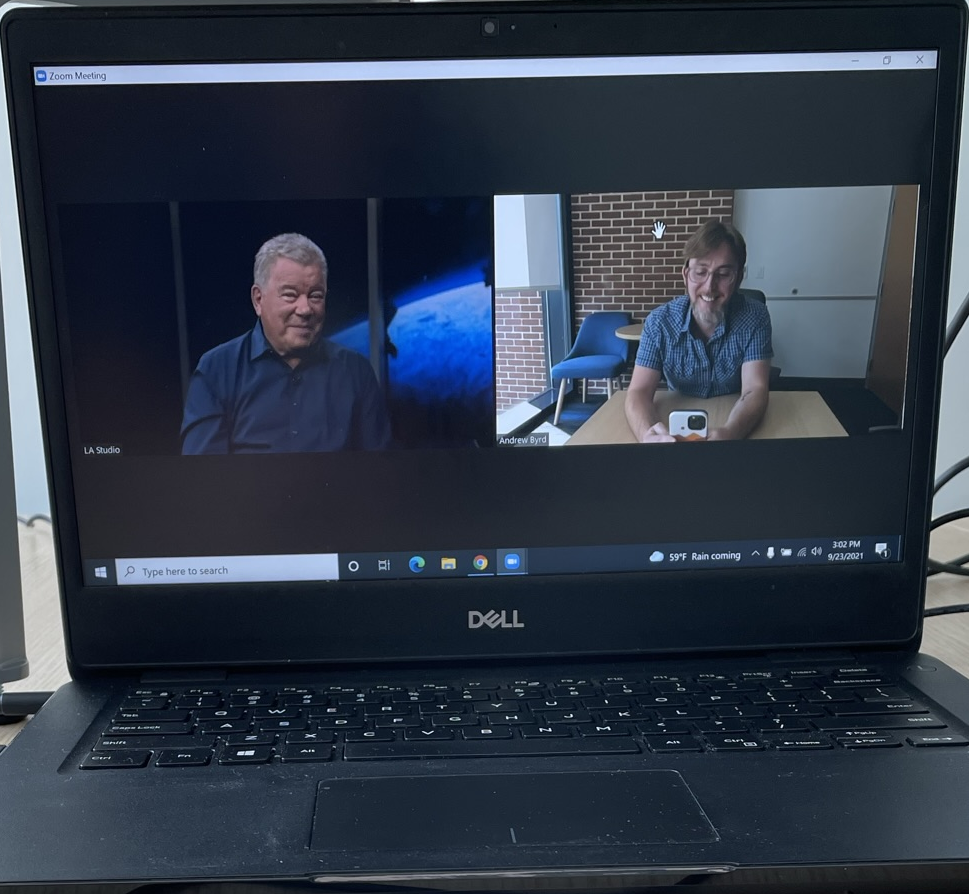
Public Scholarship & Conlanging

Public Scholarship & Conlanging
Warm-Up
Today’s Handout
Question 1
- Why are you taking this course?
- What caught your attention about decipherment?
Question 2
- What is your background?
- This can include linguistics, languages, programming, history, classics, puzzles, or anything else you think might be relevant to the class.
Question 3
- What is a book, movie, TV show, or video game that involves a puzzle, code, mystery, or hidden system that you really enjoyed?
- Briefly describe what kind of puzzle it was and why it appealed to you.
Decryption Activity
- Turn to your neighbor, and complete the remainder of the handout.
- It may take you some time; don’t fret!
Decryption

What is this course?
What Is This Course?
For as long as humans have written, they have also left behind texts that later generations could no longer read. From undeciphered scripts carved into stone to fragmentary inscriptions preserved without context, these materials pose one of the most enduring puzzles in the study of language. How do scholars determine whether a set of symbols represents language at all? When it does, how can meaning, sound, and structure be recovered without a key?
What Is This Course?
This course introduces students to the principles and practice of decipherment: the study of unknown or poorly understood writing systems. Students will learn how decipherment differs from cryptographic code-breaking, what kinds of evidence are typically missing, and which assumptions are risky or unwarranted.
What Is This Course?
Through case studies of successful decipherments and famous failures, as well as hands-on analytical exercises, students will explore how frequency, distribution, structure, and cross-linguistic comparison can be used to reason about texts whose language and meaning are unknown.
What Is This Course?
Throughout the semester, students will work with real and simulated materials, developing and testing hypotheses about scripts and languages, and culminating in a final analytical decipherment activity that demonstrates their ability to apply the methods they have learned critically and rigorously.
The Big Questions We’ll Examine
- How do we know whether a script represents language?
- What kinds of evidence are typically missing with these scripts?
- In conducting decipherments, what assumptions are safe, and which are dangerous?
- Why do some decipherments succeed while others fail?
What You’ll Be Learning
By the end of the course, you will be able to:
- Identify major types of writing systems;
- Explain what evidence is needed for decipherment;
- Identify and describe multiple languages that have been successfully deciphered (and many that have not!);
- Critically evaluate proposed decipherments;
- Do some decipherment on your own!
What This Course Is Not
- Memorizing alphabets or any other type of writing system;
- Learning ancient languages;
- Discovering a lost civilization;
- Solving mysteries by intuition.
How the Course Works
Each week includes:
- In-class decipherment activities
- At-home readings and short assessments
- Check-in quizzes every Tuesday
In-Class Activities
In each class, you’ll be doing hands-on work:
- Identifying patterns
- Testing assumptions
- Proposing hypotheses
- Rejecting bad analyses
How You’re Graded
- In-class assignments & quizzes: 30%
- Homework (readings): 20%
- Exams: 40%
- Final in-class activity: 10%
Total: 100%
In-Class Activities
If you miss class, to make up the activity:
- Your absence must be excused.
- You should contact me by e-mail to get a copy of the activity, and then submit it to me before the following Tuesday.
Tuesday Quizzes
If you miss class, to make up the quiz:
- Your absence must be excused.
- You should contact me by e-mail so that you can make it up during office hours.
Attendance
(You can see that while not required, it’s really in your interest to come to class every day!)
Exams
There are three exams.
Exam 1
- Decryption vs. decipherment
- Types of writing systems
- Identifying writing systems
- What’s needed to conduct decipherment
Exam 2
- The backbone of decipherment:
- Frequency
- Distribution
- Linguistic structure
- Case studies:
- Cuneiform
- Egyptian hieroglyphs
- Mayan hieroglyphs
- Linear B
- Cuneiform
Exam 3
- Cumulative
- Survey of Unsuccessful Decipherments:
- Etruscan, Proto-Elamite, Indus Valley Script, Zapotec, Linear A, Rongo Rongo, Meroitic, the Vinča Script
- Proto-Indo-European & Far Cry Primal
Final Activity
At the end of the semester, you will complete a final in-class analytical decipherment activity.
A Note on AI Tools
- Generative AI may not be used unless explicitly permitted
- Standard spelling and grammar tools are fine
- Unauthorized use = academic offense
If you’re unsure — ask before submitting.
One final note: I’m assuming that you…
- Have never studied linguistics;
- Have never studied (or even thought about) decryption or decipherment;
- Only speak English;
- Have a basic understanding of computers.