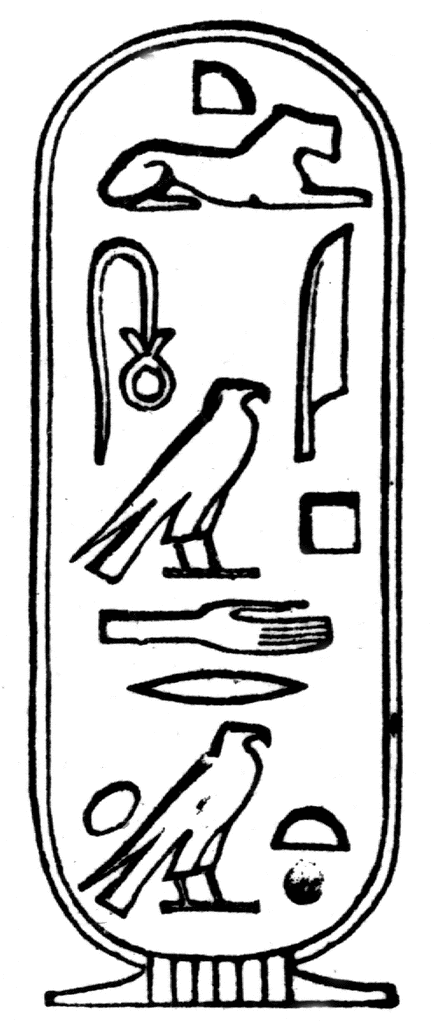
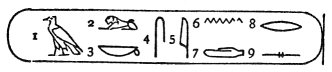
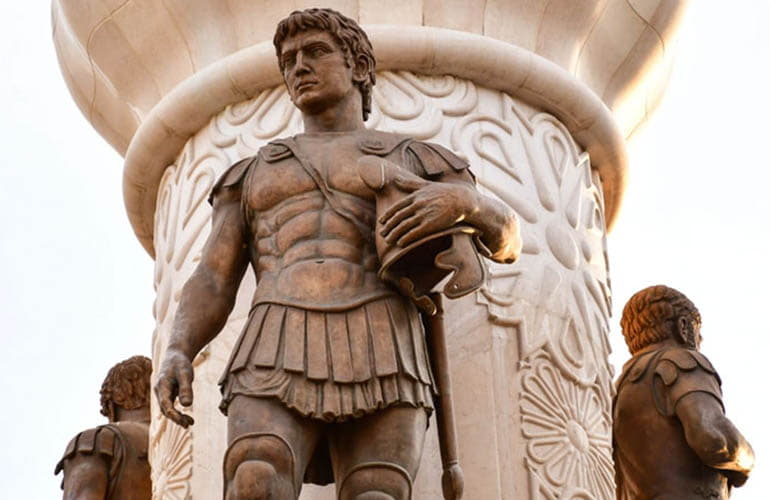
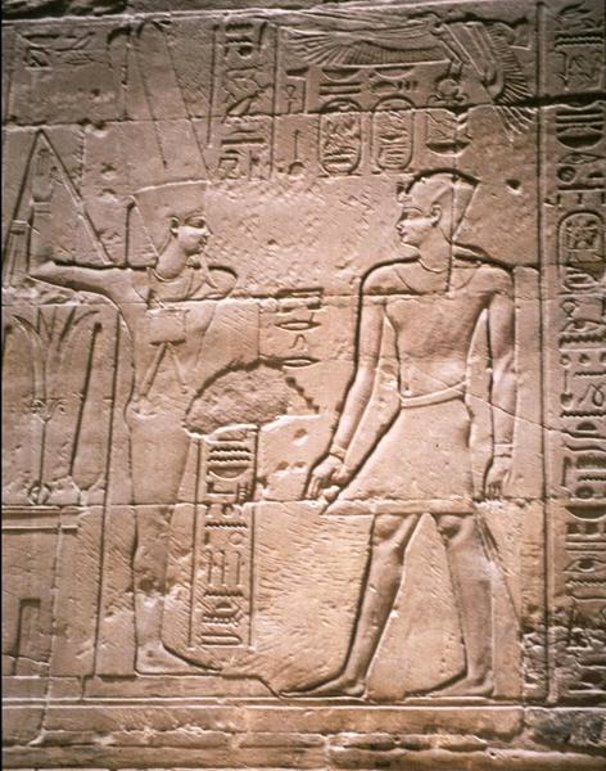
Today (and likely some next time), we’ll see:
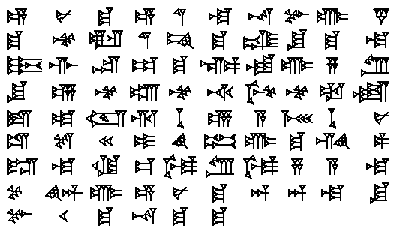
- The English alphabet – and most writing systems used around the world – go back to hieroglyphs
Alphabet
![]()
Semitic Abjad
![]()
How did the abjad come about?
How did the abjad come about?
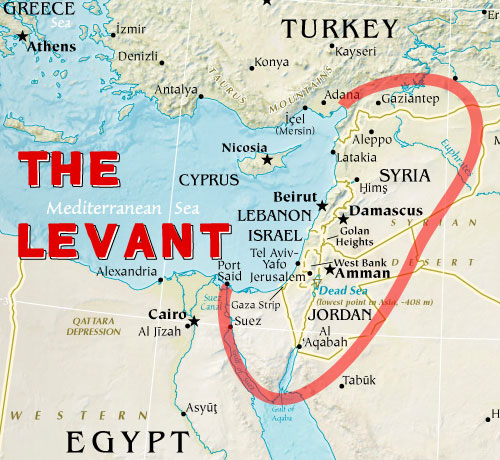
- The Levant was a crossroads between two important empires
![]()
How about Egyptian?
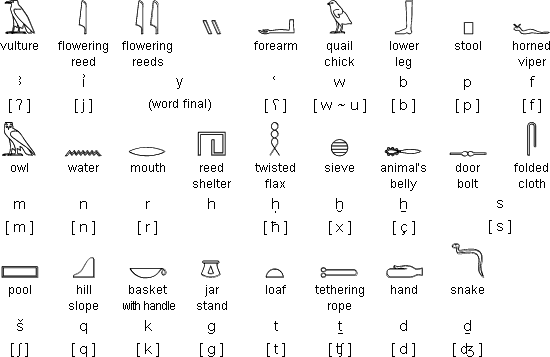
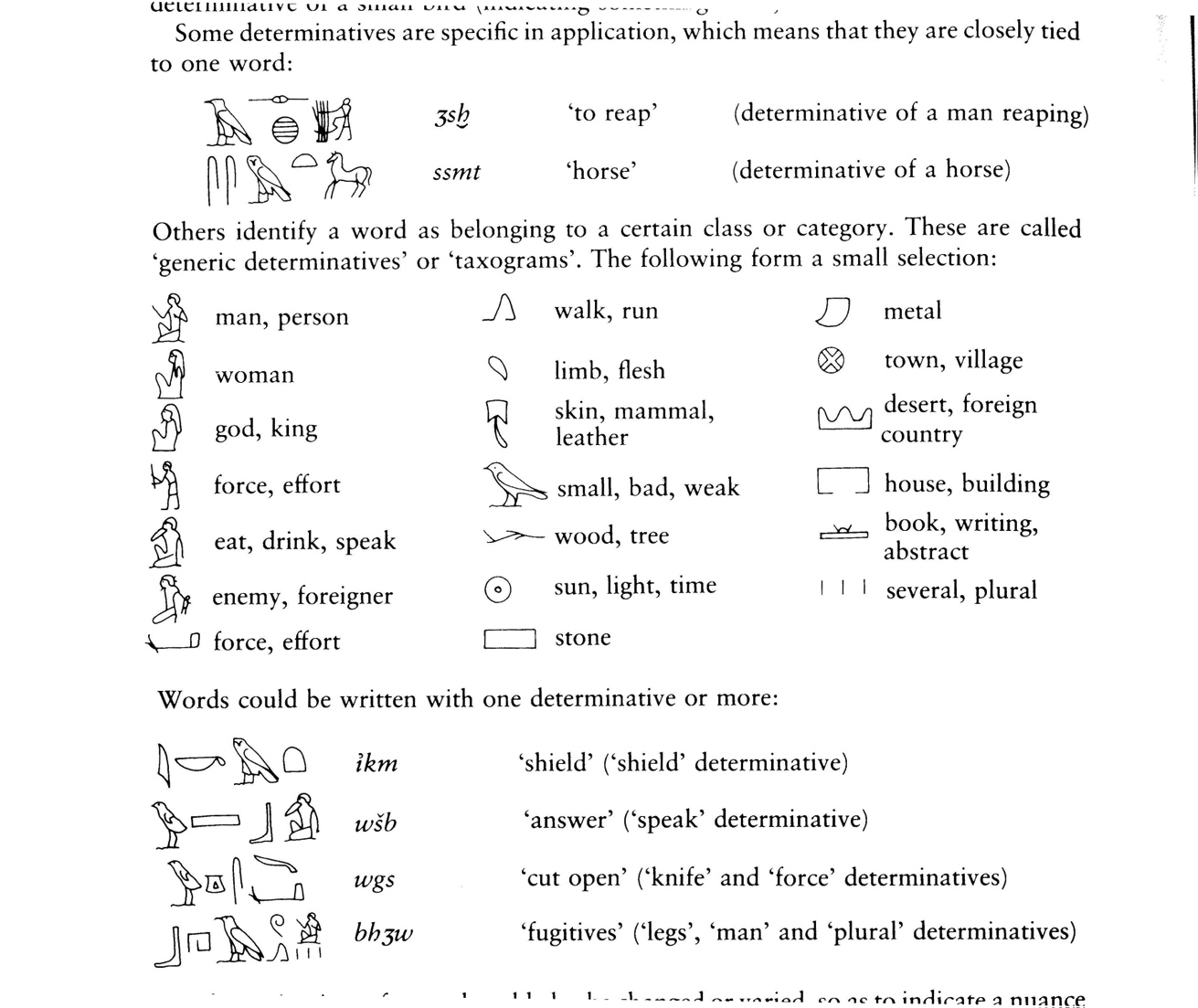
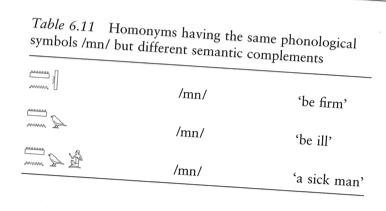
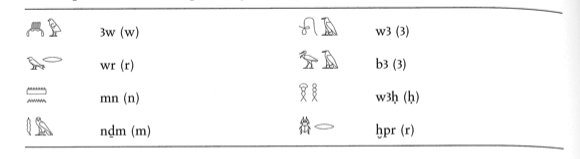
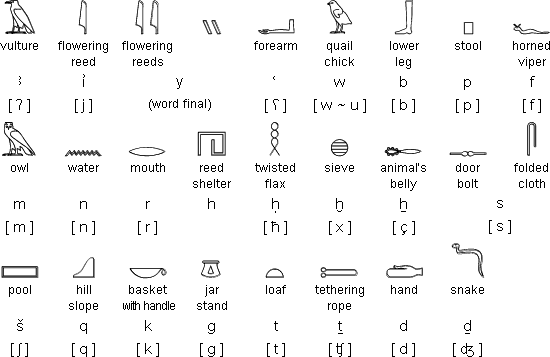
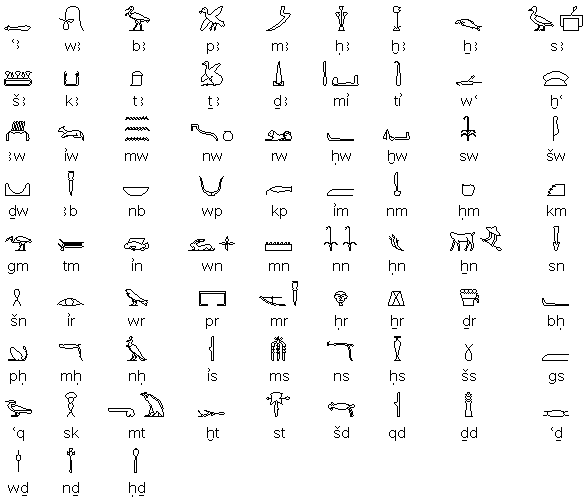
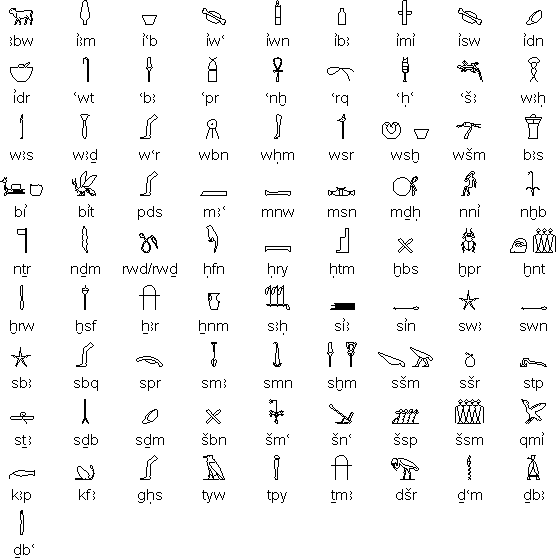
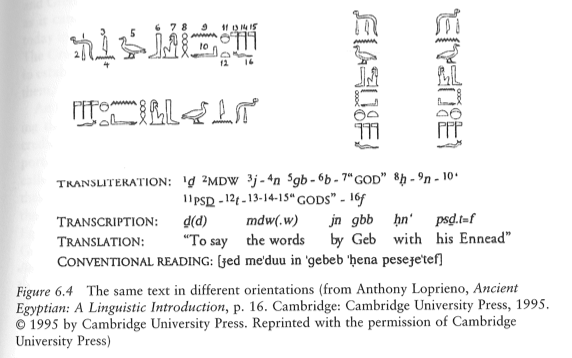
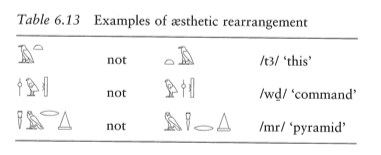
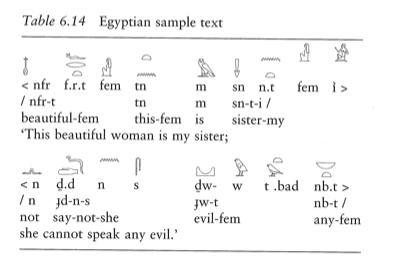
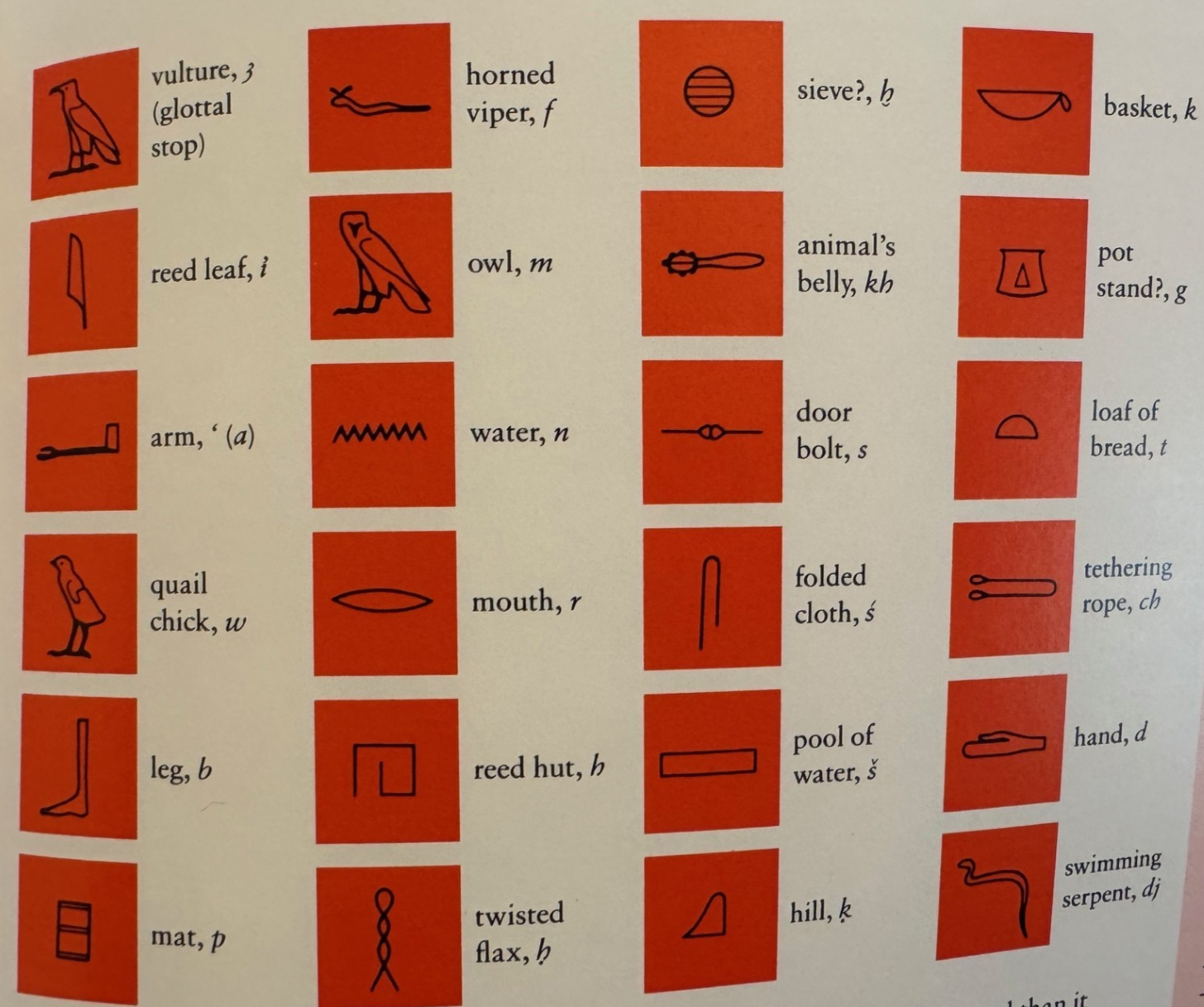
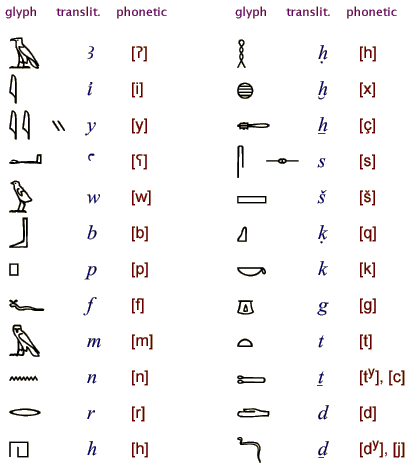
- They had logograms, determinatives, phonetic complements, two-C characters, 3-C characters, etc.
How about Egyptian?
But also:
![]()
Semitic Abjad
![]()
“Egyptian for Dummies”
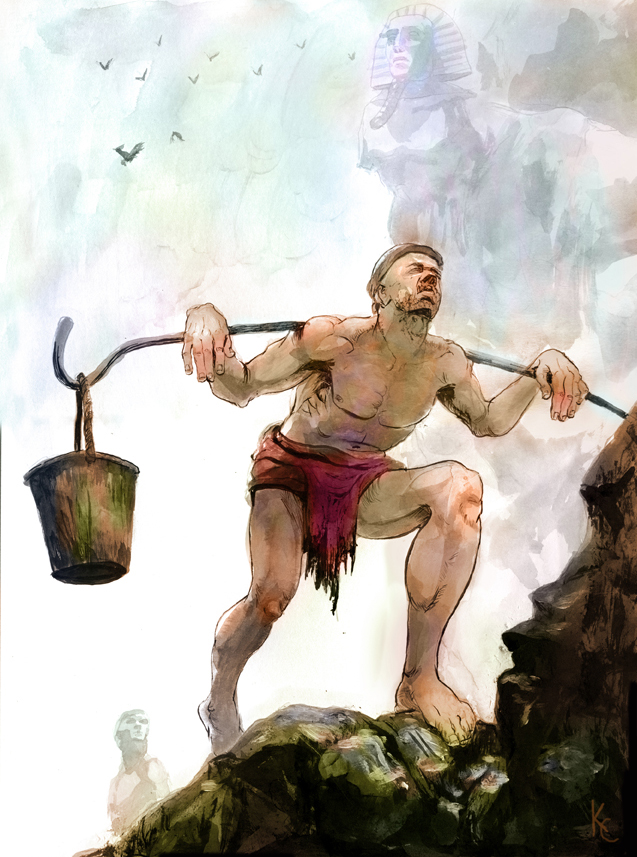
But the Semitic mercenaries and delta dwellers who created the Semitic alphabet were not interested in maintaining the old fuddy-duddy Egyptian tradition.
Some Semitic speakers must have acquired at least some literacy in Egyptian, and they must have understood the benefits of writing
“Egyptian for Dummies”
- But it’s clear not all of them knew Egyptian, and they certainly didn’t know the complex logophonographic system that was set in place by the Egyptians, which only a few Egyptians had been able to master
“Egyptian for Dummies”
![]()
“Egyptian for Dummies”
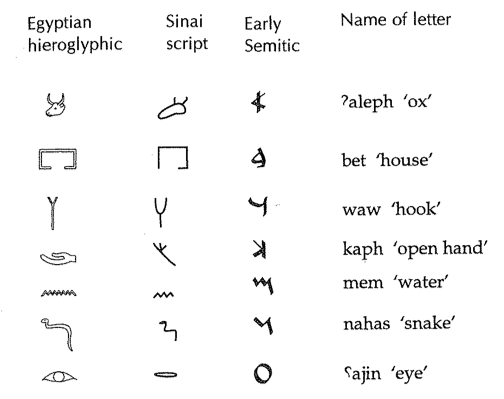
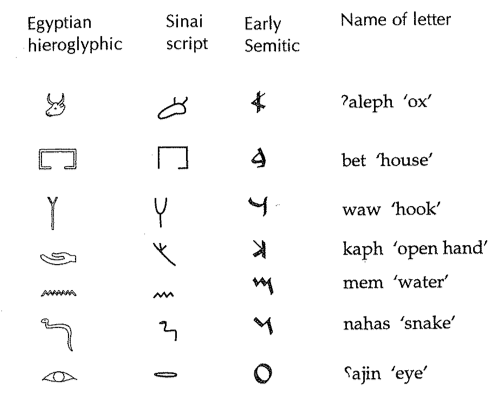
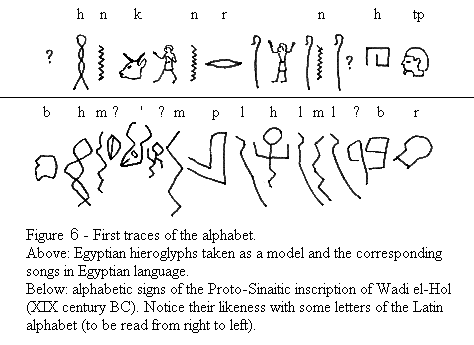
- So, as Amelia Gnanadesikan writes: they created their own bare-bones set of uniconsonantal signs, modeled after the Egyptian ones.
- This was the “For Dummies” version of writing, stripped of all complexity and redundancy.
From Egyptian to Semitic
![]()
Acrophony
- The value of Semitic symbols, like their Egyptian precursors, were derived through acrophony
Acrophony
- When the value of an iconic writing character is taken from the first sound of the name of the object it represents
Acrophony
![]()
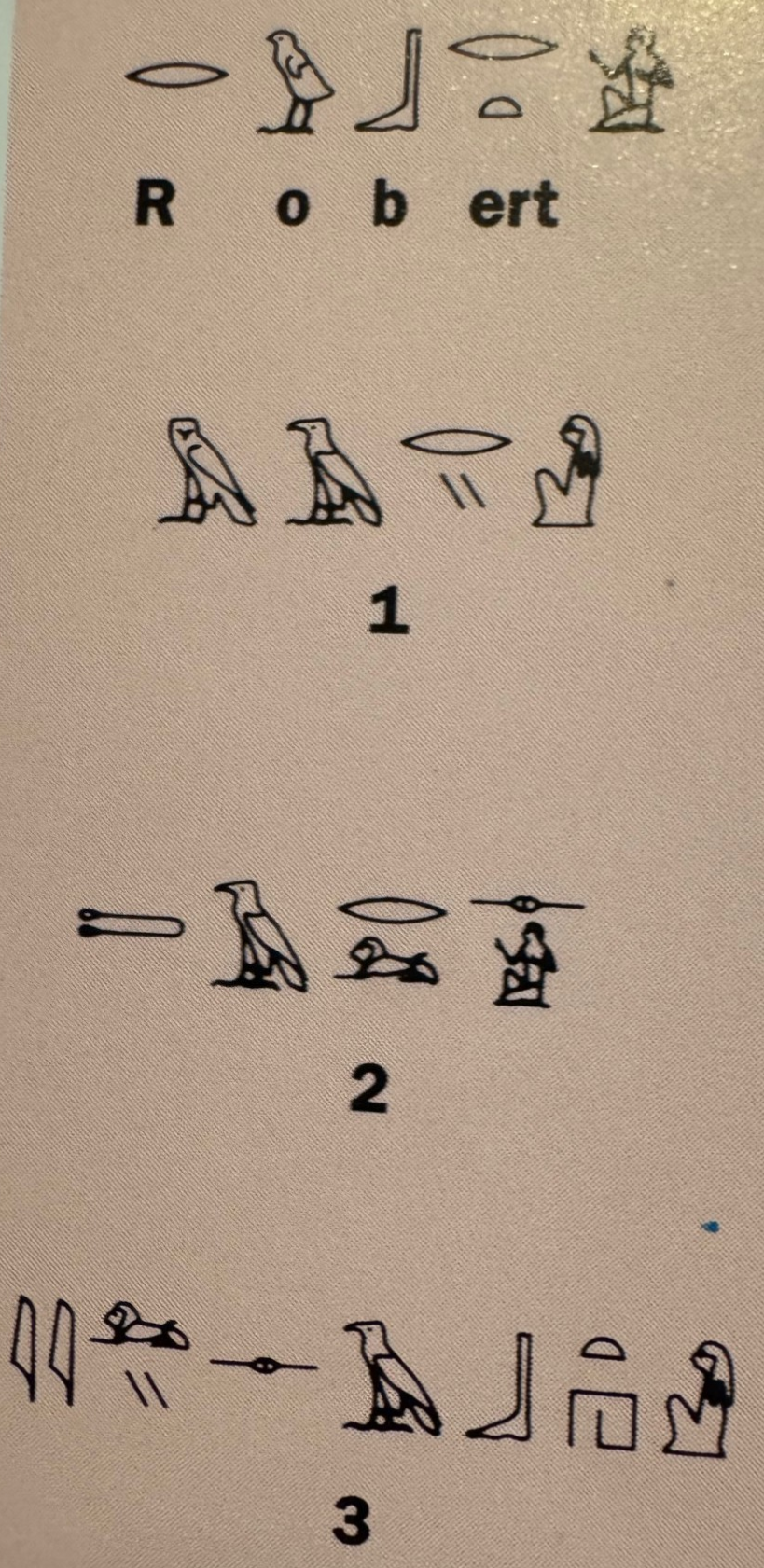
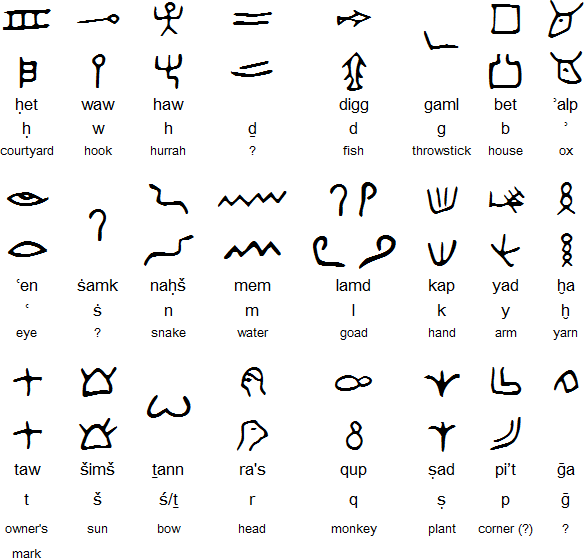
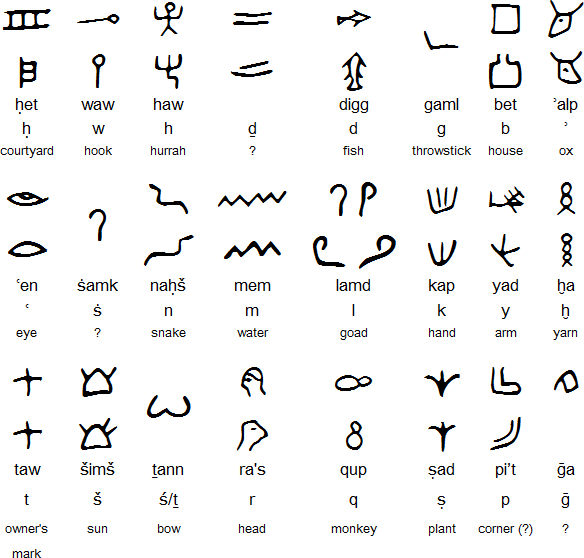
Following the principles of acrophony, what does this say?
Acrophony in Proto-Canaanite
The symbols and the acrophonic principle were borrowed from Egyptian – the sound values of the graphemes were not!
< pr > → < b >, Semitic bēt ‘house’
< n > → < m >, Semitic mem ‘water’
< ɟ > → < n >, Semitic nahas ‘snake’
< r > → < ʕ > , Semitic ʕayin ‘eye’
Acrophony in Proto-Canaanite
![]()
Progression of the Semitic Abjad
- The first Semitic speakers to use the abjad are speakers of “Proto-Canaanite”, beginning around 1700 bce
- These speakers worked in the Egyptian mines and had relatives living in Middle-Bronze-Age Palestine
Progression of the Semitic Abjad
- We’ve only got a few inscriptions, all quite short Initially the number of letters within the abjad was 27 – reduced to 22 by the 13th c.
- The linear orientation was originally anything goes:
- L → R
- R → L
- vertical columns
- horizontal / vertical boustrophedon
Proto-Sinaitic / Proto-Canaanite script
![]()
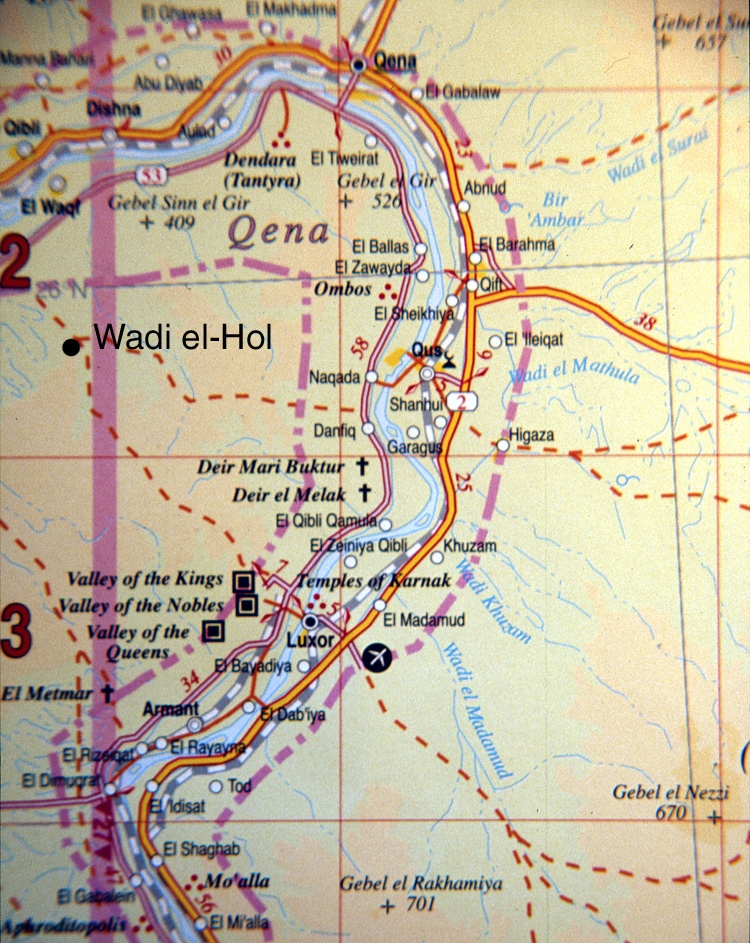
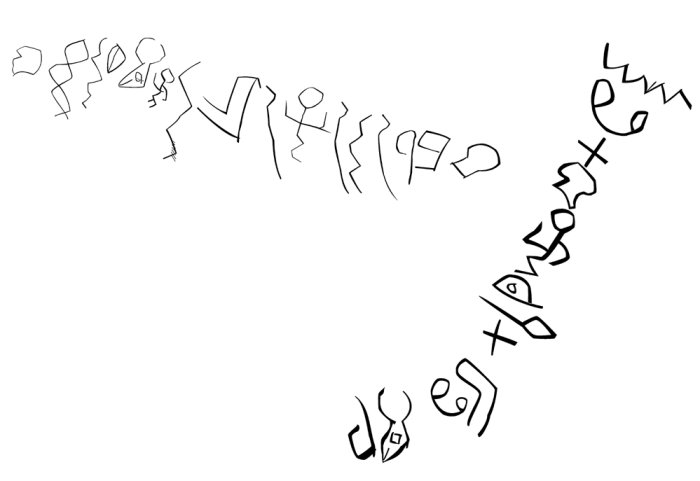
Oldest text: Wadi el Hol, 1800 BCE, undeciphered
![]()
Which letters can you identify?
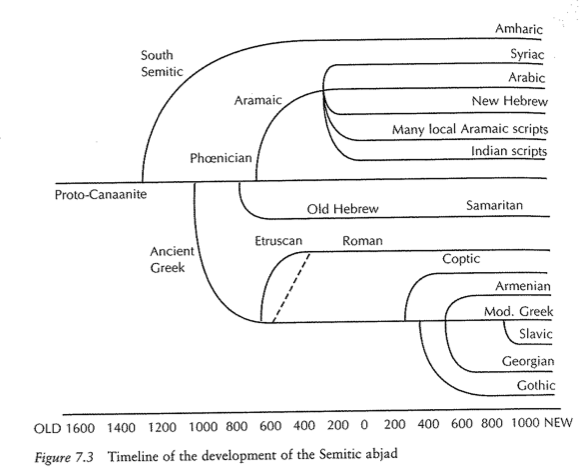
Lineage of Semitic Writing Systems
![]()
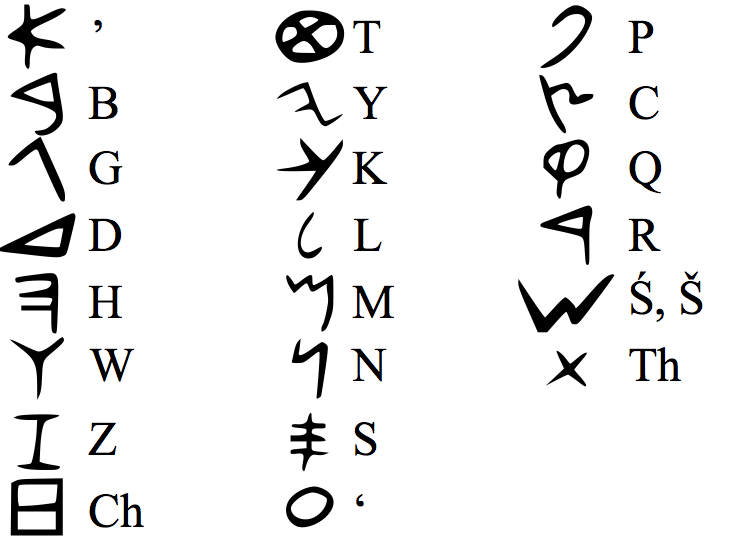
Phoenician
- In 1050 BCE the Semitic people in the northern Levant became known as the Phoenicians
- They were important traders in the Mediterranean and founded a number of colonies, - most notably Carthage off the coast of North Africa (present-day Tunisia)
Phoenician
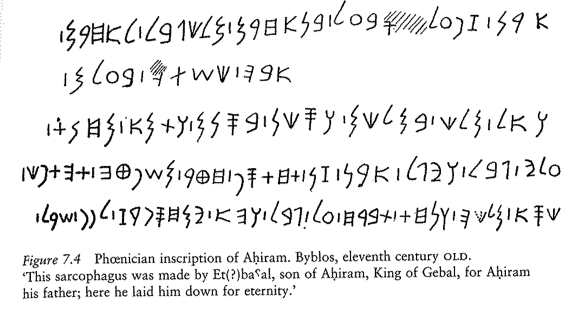
Written R → L and the script has lost its iconic quality entirely Phoenician evolved into Punic, with the latest inscription attested in 200 ce
Phoenician inscription of Aḥiram
![]()
The Alphabet
Gnanadesikan:
“The alphabet has been touted as one of humankind’s greatest inventions – and not without cause. Equally, though, the alphabet is a monument to human stupidity and hidebound conservatism. Originally conceived as a dumbed-down version of writing for the illiterate, it was simple enough to spread easily from one language to the next; however, it was rarely adapted thoughtfully to the new language. (G 143)
Origins of the Greek Alphabet
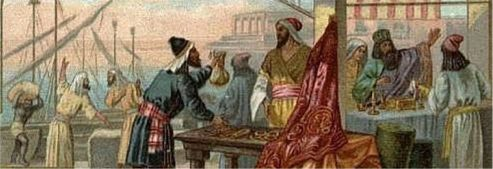
- The Semitic abjad was probably brought to Greece by Phoenician traders
- It’s the first application of the Semitic consonantal alphabet to a non-Semitic language.
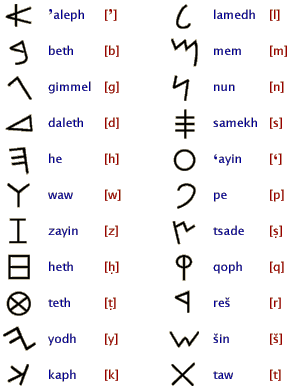
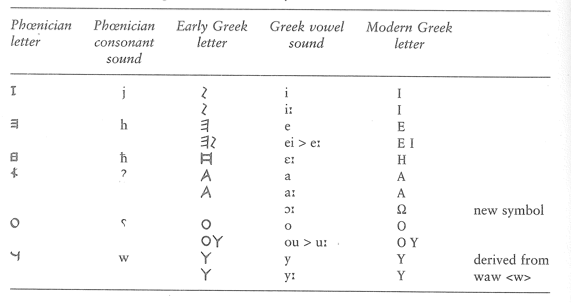
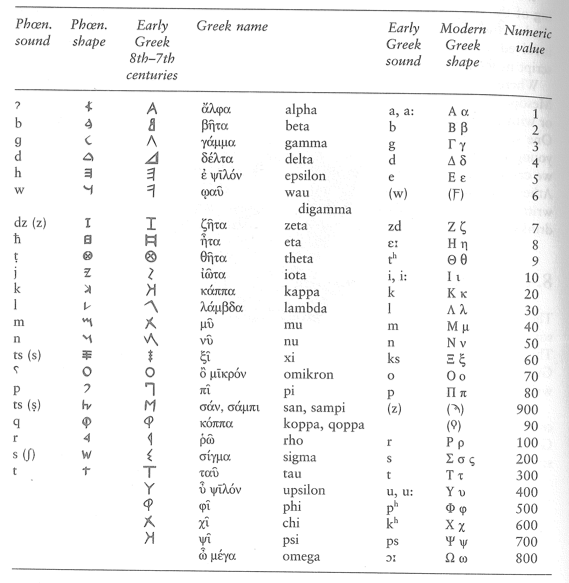
Phoenician Abjad → Greek Alphabet
![]()
Phoenician Traders
Greek Alphabet < Phoenician Abjad
- They look extremely similar.
Greek Alphabet < Phoenician Abjad
- The order of the letters is pretty much the same.
Where did this order originate?
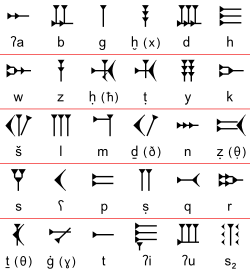
![]()
Ugaritic, ca. 1300 BCE
Greek Alphabet < Phoenician Abjad
- The letter names are basically the same.
Greek Alphabet < Phoenician Abjad
- Names actually mean something in Semitic, but nothing in Greek:
- ’aliph = ox
- bēt = house
- gimel = camel
- waw = crook
Greek Alphabet < Phoenician Abjad
- The Greeks called their alphabet:
- φοινικεῖα γράμματα ‘Phoenician letters’ [phojnikeja grammata]
- καδμεῖα γράμματα ‘Cadmean letters’ [kadmeja grammata]
- Cadmus = legendary creator of alphabet who just happened to be Phoenician
Problems
- The date of borrowing of the Greek alphabet is quite problematic:
- although the earliest Greek text dates to the 8th c. bce, the earliest form of Greek writing most resembles Phoenician writing from the 11th c. bce
- Shapes of Letters & Boustrophedon = 11th c. Phoenician
Why the gap?
- We can always say that the early Greeks wrote on “perishable materials”, but this is an unfalsifiable argument!
- So scholars keep on digging for those older texts.
![]()
Biggest difference between Phoenician and Greek?
How did an abjad become an alphabet?
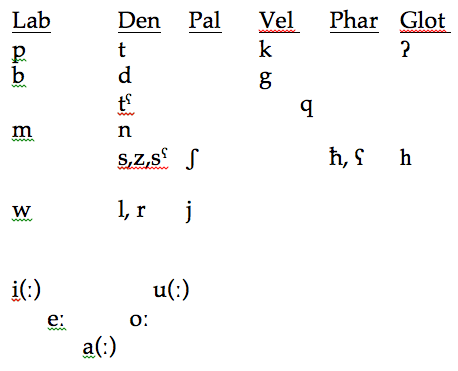
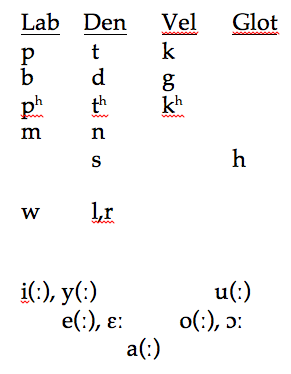
Identify at least three differences between the two languages’ sound systems
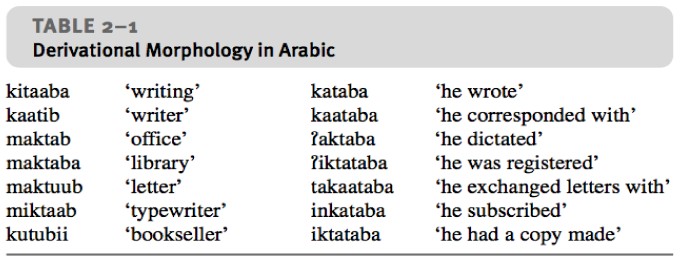
Furthermore… Semitic has Ablaut!
But how would the following Greek words be written in an abjad? ἐάω [eáoː] ‘I allow’ ἀάατος [aáatos] ‘sunless’
![]()
Creating an Alphabet
![]()
Creating an Alphabet
![]()
Creating an Alphabet
![]()
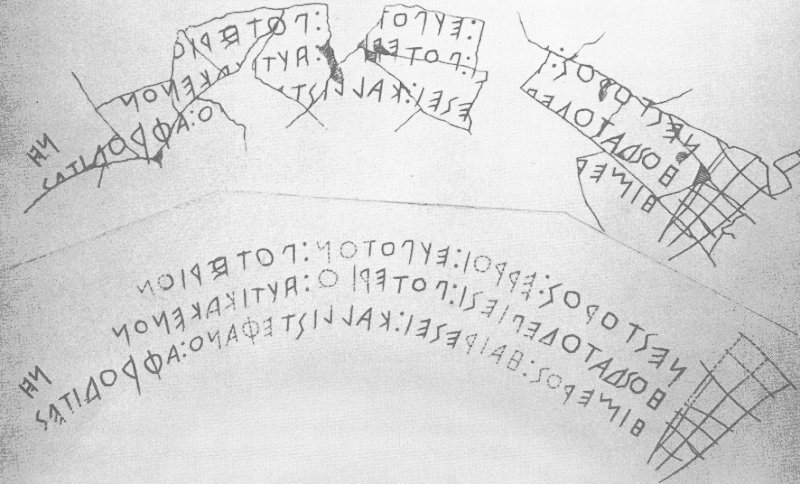
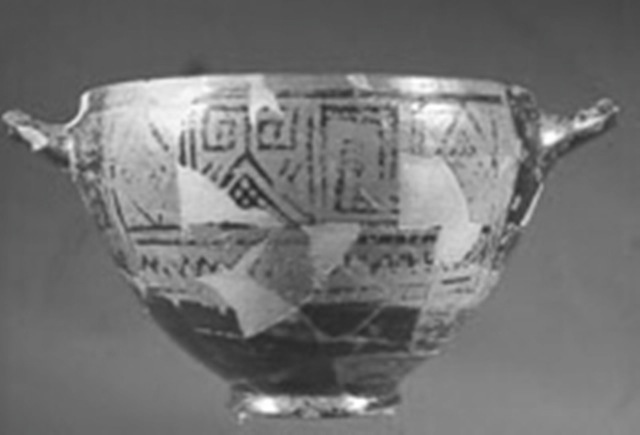
Early example: Nestor’s Cup
![]()
Nestor’s Cup
![]()
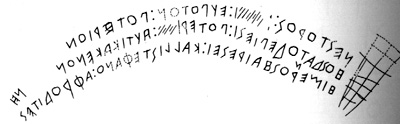
“(I am) Nestor’s cup, (and I’m) good to drink from. Whoever downs this cup will immediately be seized by the desire for the fair-headed Aphrodite.”
Linear Orientation?
![]()
- ΝΕΣΤΟΡΟΣ: ΕΡΡΟΙ : ΕΥΠΟΤΟΝ : ΠΟΤΕΡΙΟΝ
- ΗΟΣ ΔΑ ΤΟΔΕ ΠΙΕΣΙ : ΠΟΤΕΡΙO. : AΥΤΙΚΑ ΚΕΝΟΝ
- ΗΙΜΕΡΟΣ : ΗΑΙΡΕΣΕΙ : ΚΑΛΛΙΣΤΕΦΑΝΟ : ΑΦΡΟΔΙΤΕΣ
It’s Greek to You
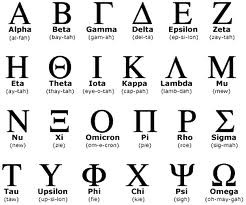
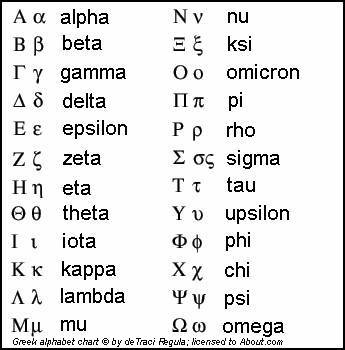
The following are names of famous Greek people, gods, and places.
Consulting https://omniglot.com/writing/greek.htm try to decipher these names. The first has been done for you.
- Πλάτων Plato
- Περικλῆς
- Σπάρτα
- Ὅμηρος
- Σαπφώ
- Ἀθῆναι
- Ζεύς
Synopsis
- Tokens →
- Cuneiform →
- Egyptian Hieroglyphs →
- Proto-Semitic Abjad →
- Phoenician →
- Ancient Greek Alphabet → …
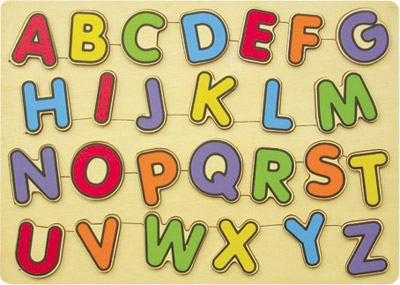
- English Alphabet