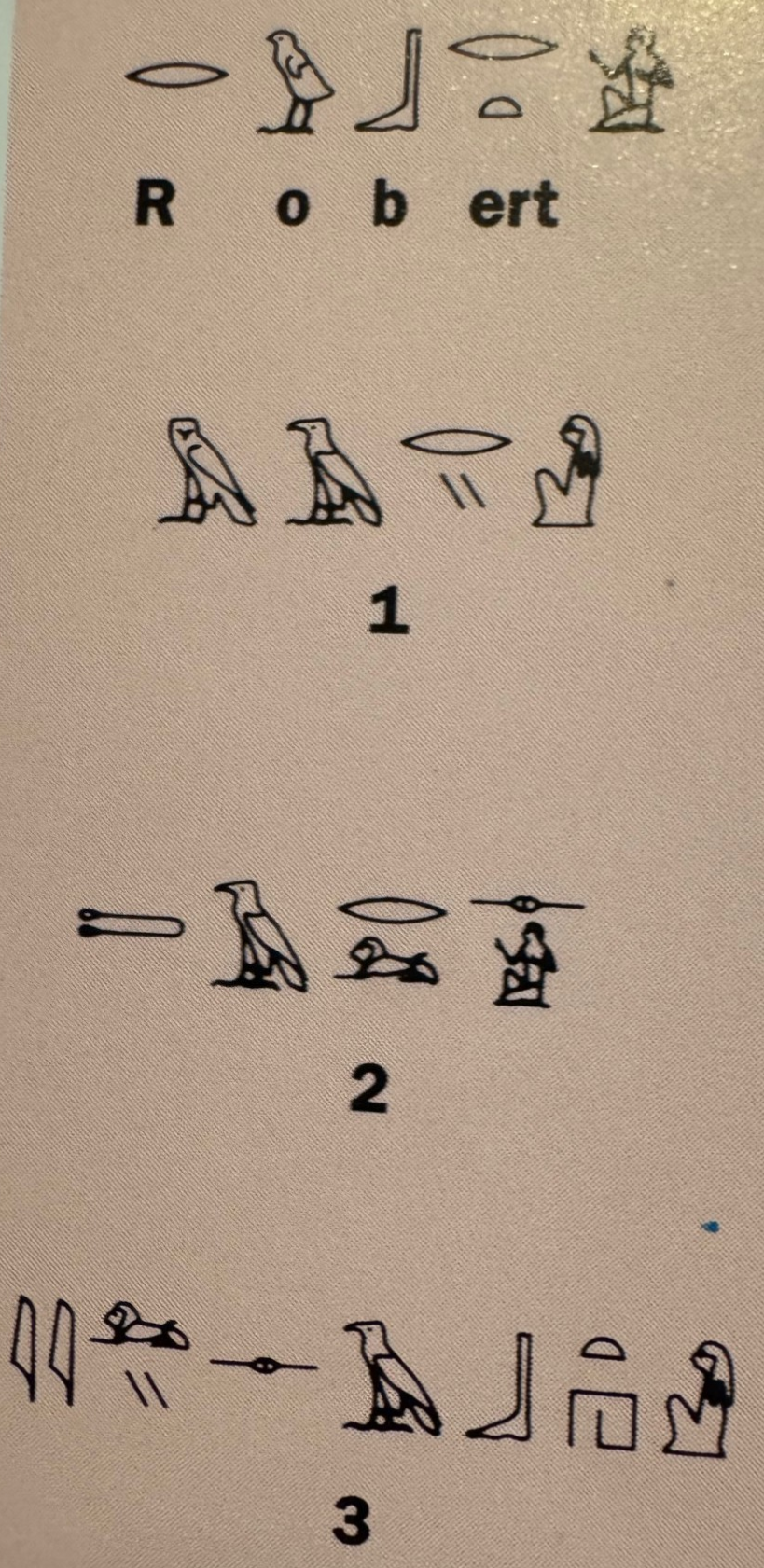
Decipherment

Day 15: Egyptian Hieroglyphs

Dr. Andrew M. Byrd

Review

Review from Last Time

  • What is the monogenetic theory of writing? Is it correct?
  • What is the pictographic theory of writing? Is it correct?
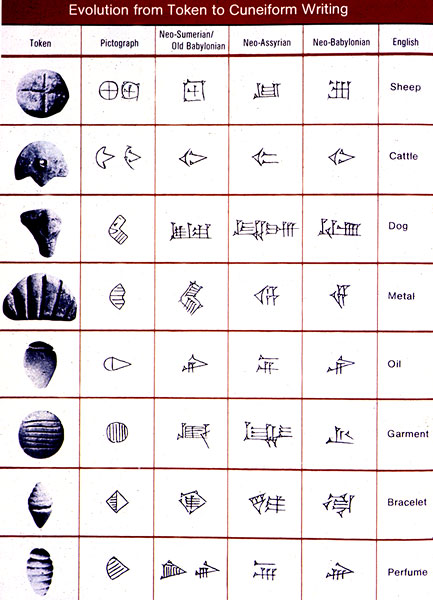
  • What is the rebus principle, and how did it lead to the invention of phonographic signs in cuneiform?

Review from Last Time

Review from Last Time
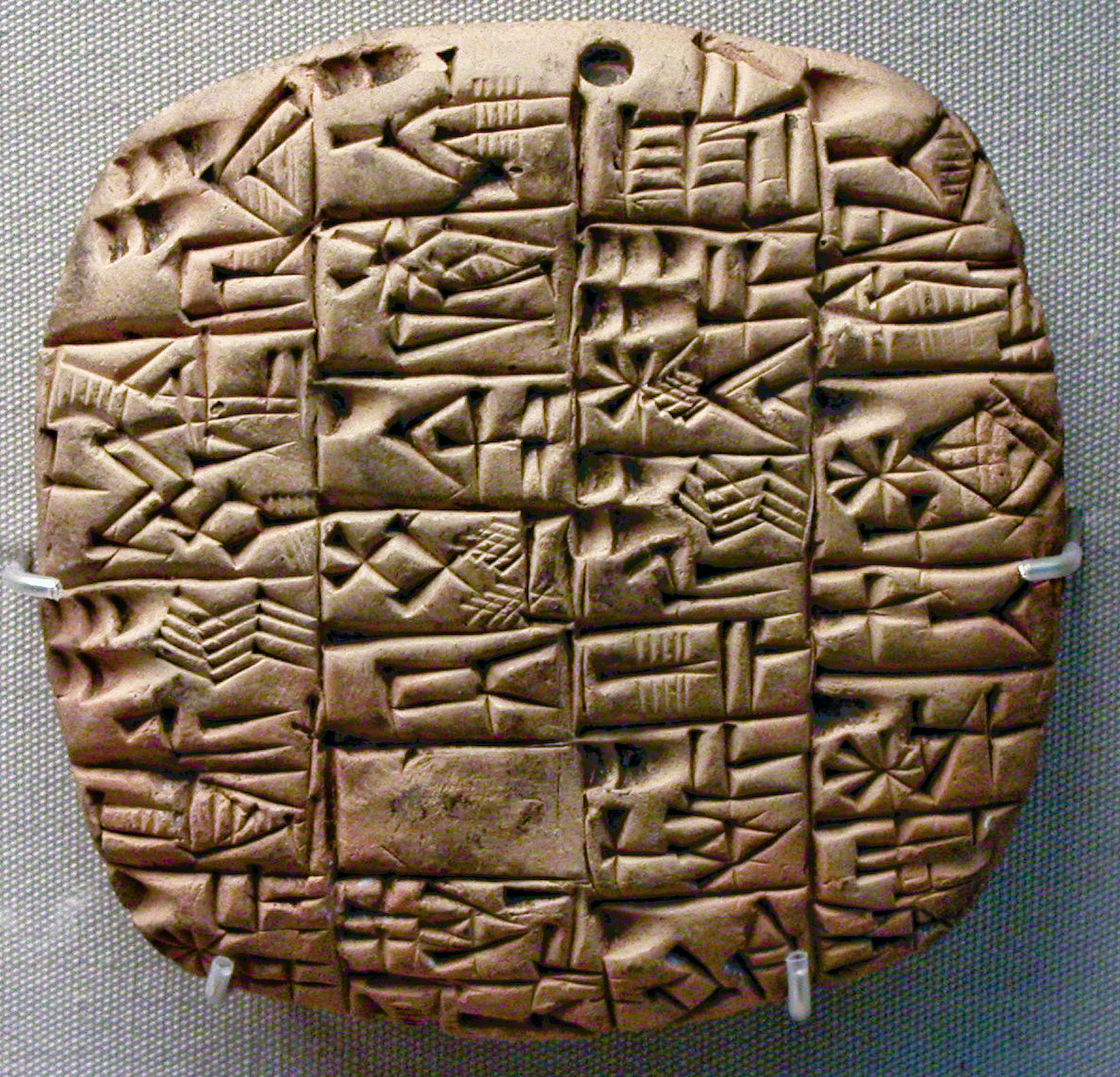
Hieroglyphs

This Week: Egyptian Hieroglyphs

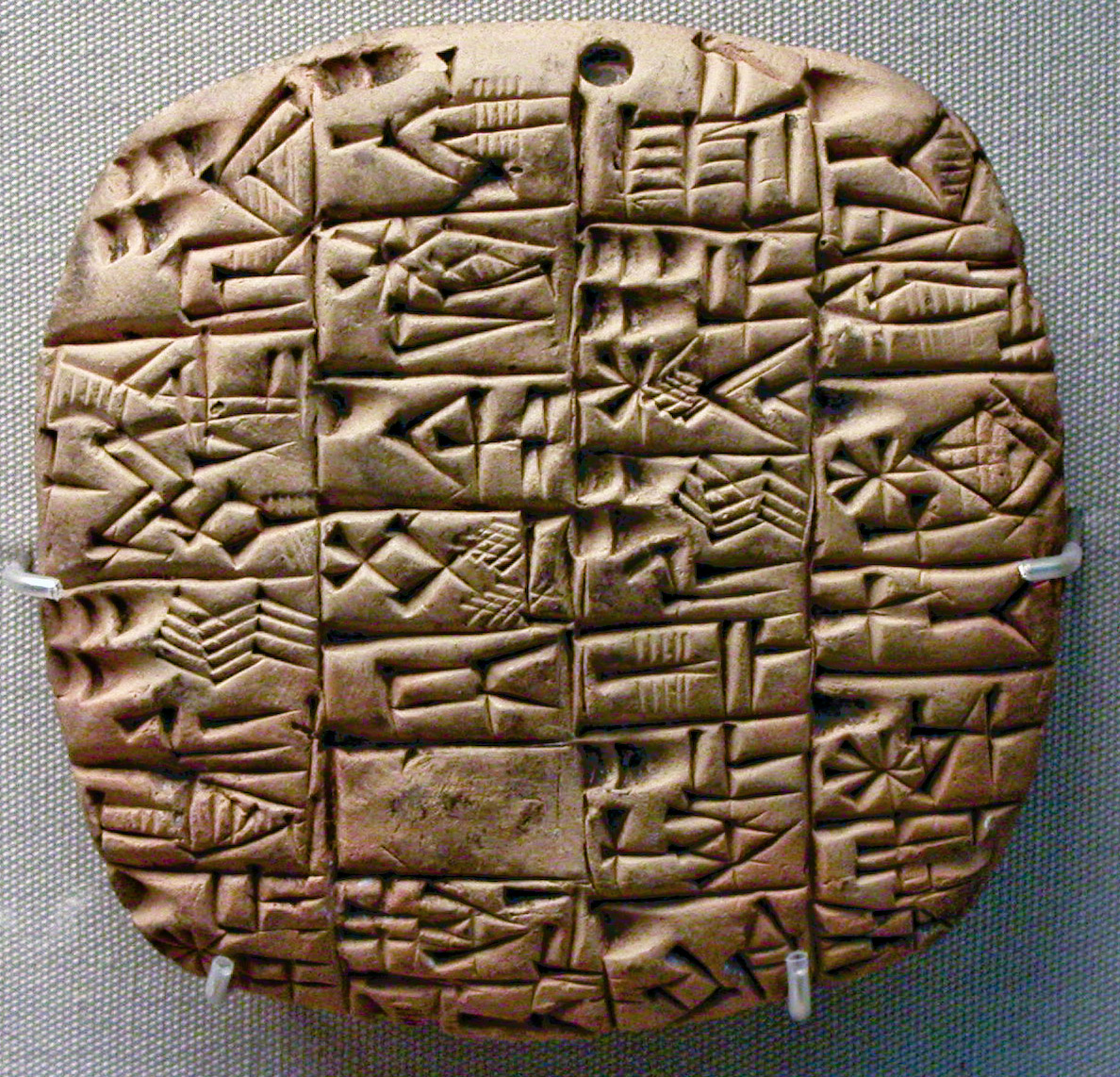
Sumerian: 3300 BCE

Basically invented at the same time!
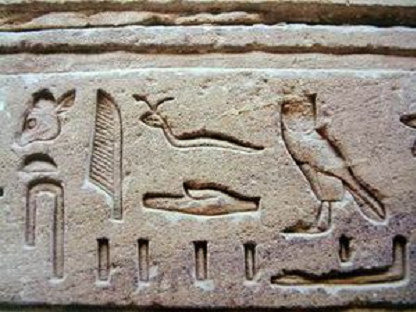
Egyptian: 3150 BCE

Basically invented at the same time!
Stimulus Diffusion or Independent Invention?

Most common view is that the hieroglyphs were invented by stimulus diffusion.
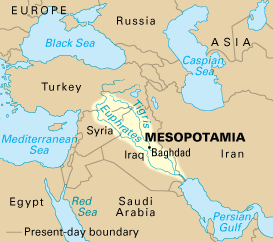
Stimulus Diffusion
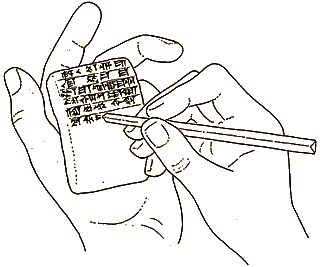
Stimulus Diffusion
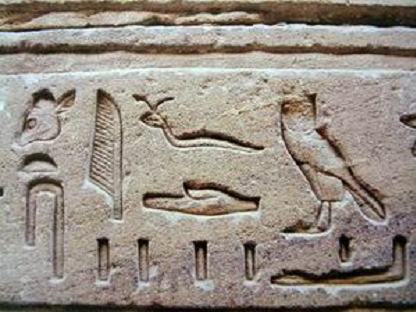
Stimulus Diffusion
Stimulus Diffusion

Stimulus Diffusion

Stimulus Diffuision
Stimulus Diffusion

Stimulus Diffusion

Stimulus Diffusion or Independent Invention?
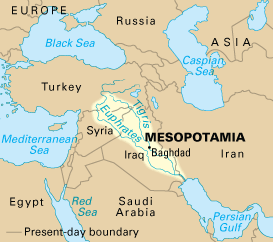
  • No obvious evolution of writing in Egypt
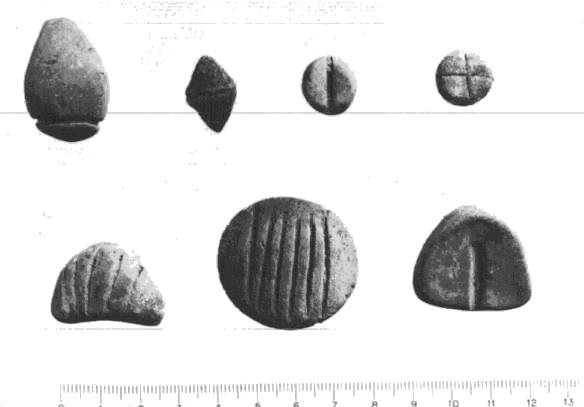
  • Unlike Mesopotamia… Tokens (ca 10000 y BP)
  • Writing (5000+ y BP)

Günter Dreyer

Dreyer’s Counterargument: Abydos
Dreyer’s Counterargument: Abydos
Dreyer’s Counterargument: Abydos

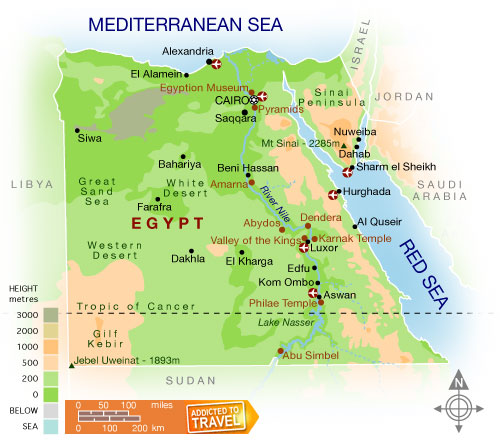
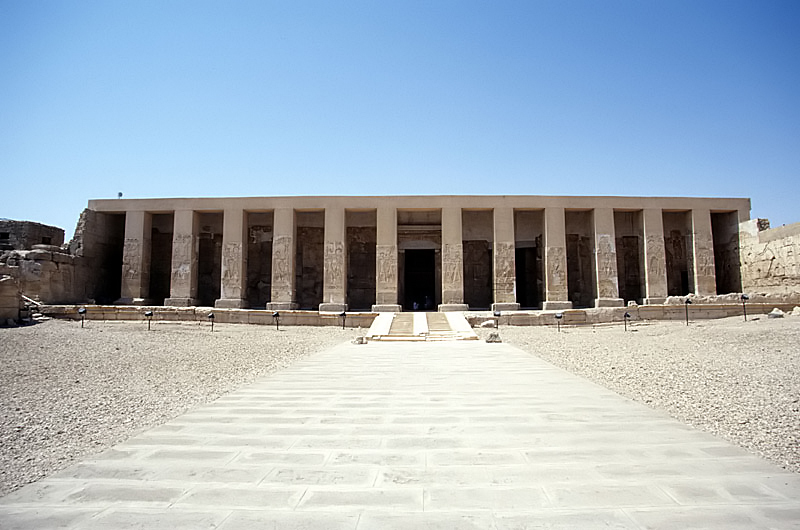
  • German archaeologist Günter Dreyer discovered bone and ivory “tags”, pottery vessels and clay seal impressions with hieroglyphs in tombs in Abydos, Egypt (250 miles south of Cairo)

Dreyer’s Counterargument: Abydos

He claims to date at least as early as 3200, perhaps even 3400 bce and are best understood as writing (i.e., represent language)
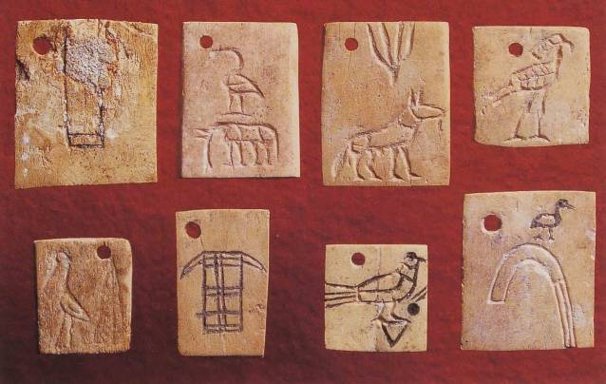
Dreyer – 3 categories for Abydos Seals
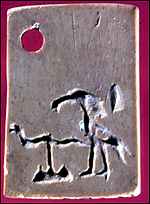
Some carried unique symbols that do not appear in later writing, and thus cannot be deciphered.

Abydos Seals
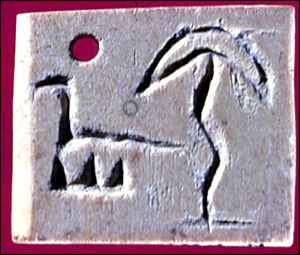
Some labels carried symbols also seen in later hieroglyphics, and could be deciphered.

Abydos Seals
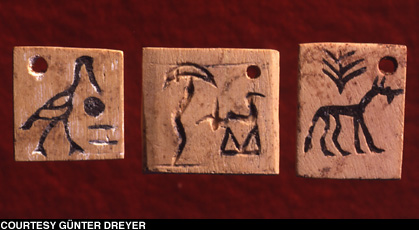
  • Some labels had symbols that can be understood pictographically (cf. Native American pictographs).
  • Thus the appearance of a symbol for a tree and an animal apparently meant “from the plantation [indicated by the tree] of the king whose symbol is this animal.”

Purpose of Seals

According to Dreyer, purpose of early hieroglyphs purely economic, just as we see in early cuneiform.

Purpose of Seals
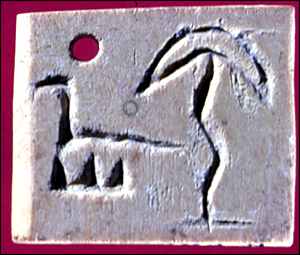
STORK + CHAIR?
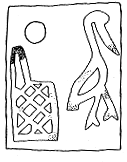
  • For Dreyer, some labels require a phonographic reading < ba fet >
    • = city name on the Nile Delta (based on later hieroglyphic readings)
    • makes no sense as STORK + CHAIR!
  • Through the rebus principle, these symbols are phonographic

Dreyer

  • If Dreyer’s dates are incorrect:

    • Most likely that the idea of writing spread from Mesopotamia

    • Supported by little amount of proto-writing in Egypt

  • If Dreyer is correct:

    • Egyptian hieroglyphs may have been the world’s first writing system
Sumerians

For the Sumerians, writing in the beginning was really all about…
But in Egypt:

mdwt nṯr “word of god” = hieroglyphs
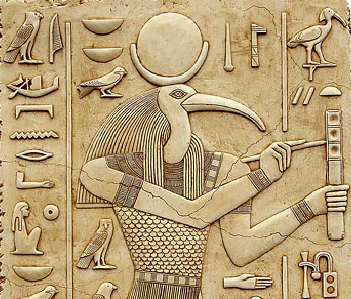
The Magic of Writing

Fairly common in the ancient world
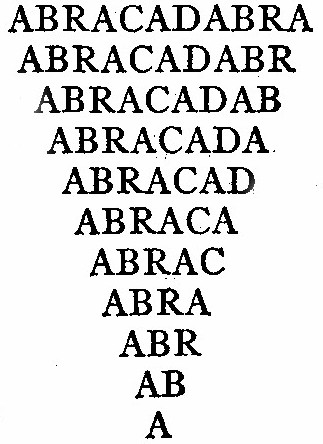
The Decipherment of Egyptian Hieroglyphs

How was Egyptian deciphered?

  1. Pre-Modern Times

  2. Napoleonic Conquest –> Rosetta Stone

  3. Decipherment by Young & (especially) Champollion

Pre-Modern Times

  • Hieroglyphs were last written by an Egyptian around 1600 years ago

    • Understanding completely lost
  • Romans and Greeks were fascinated

    • 9 out of 13 existing obelisks standing in Rome

Obelisk at the Vatican (originally Heliopolos)

Pulcino della Minerva

Athanasius Kircher (1602-1680)

Athanasius Kircher (1602-1680)

  • Kircher was a German Jesuit scholar based mostly in Rome

    • one of the great “universal geniuses” of the 17th century.
  • He wrote on everything: magnetism, China, volcanology, music, optics, cryptography, and Egypt.

  • If there was a mysterious system or exotic language, he wanted a crack at it

Athanasius Kircher (1602-1680)

In Kircher’s day, Europeans largely believed hieroglyphs were:

  • Symbolic, mystical emblems

  • Vehicles of hidden philosophical or theological truths

  • A kind of sacred wisdom language, not ordinary writing

Athanasius Kircher (1602-1680)

  • Most of Kircher’s interpretations of hieroglyphs are wrong, but he did have one major insight

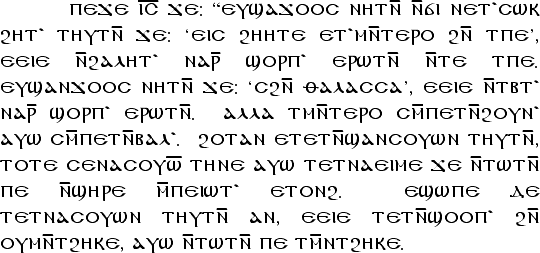
  • Coptic – the language of the Egyptian church – is an evolved form of Ancient Egyptian

    • Aegypt-ik-os > Copt-ic

Coptic

Abbé Jean-Jacques Barthélemy (1716-1795)

Barthélemy: Cartouches

Barthélemy: Cartouches

Georg Zoëga (1755-1809)

Georg Zoëga (1755-1809)

  • Danish scholar working in Rome

  • Close to papal collections of Egyptian materials

  • Treated hieroglyphs as a historical writing system, not as mystical symbolism

Georg Zoëga (1755-1809)

  • By the late 18th century, Kircher’s (incorrect work) was still influential.

  • Zoëga rejected that approach and instead emphasized:

    • Repetition

    • Distribution

    • Context (monument type, historical placement, etc.)

Napoleonic Conquest

Napolean

After the French Revolution, France was at war with Britain. By 1797–98:

  • France controlled much of continental Europe.

  • Britain remained the main enemy.

  • A direct invasion of Britain was unrealistic — the Royal Navy dominated the sea.

So the French Directory government looked for another way to weaken Britain.

Why Egypt?

Egypt was technically part of the Ottoman Empire, but loosely controlled.

Strategically, Egypt mattered because:

  • It sat on the route to India.

  • India was Britain’s economic jewel.

  • Controlling Egypt could threaten British trade and imperial access.

Invading Egypt

But Napoleon didn’t just bring soldiers. He brought:

  • 150+ scholars, engineers, linguists, artists.

  • The Commission des Sciences et des Arts.

    • documented monuments, inscriptions, flora, fauna, architecture.

Invading Egypt: The Battle of the Pyramids

Domenique Vivant Denon

Domenique Vivant Denon

Ramifications

Ramifications

Ramifications

The Rosetta Stone
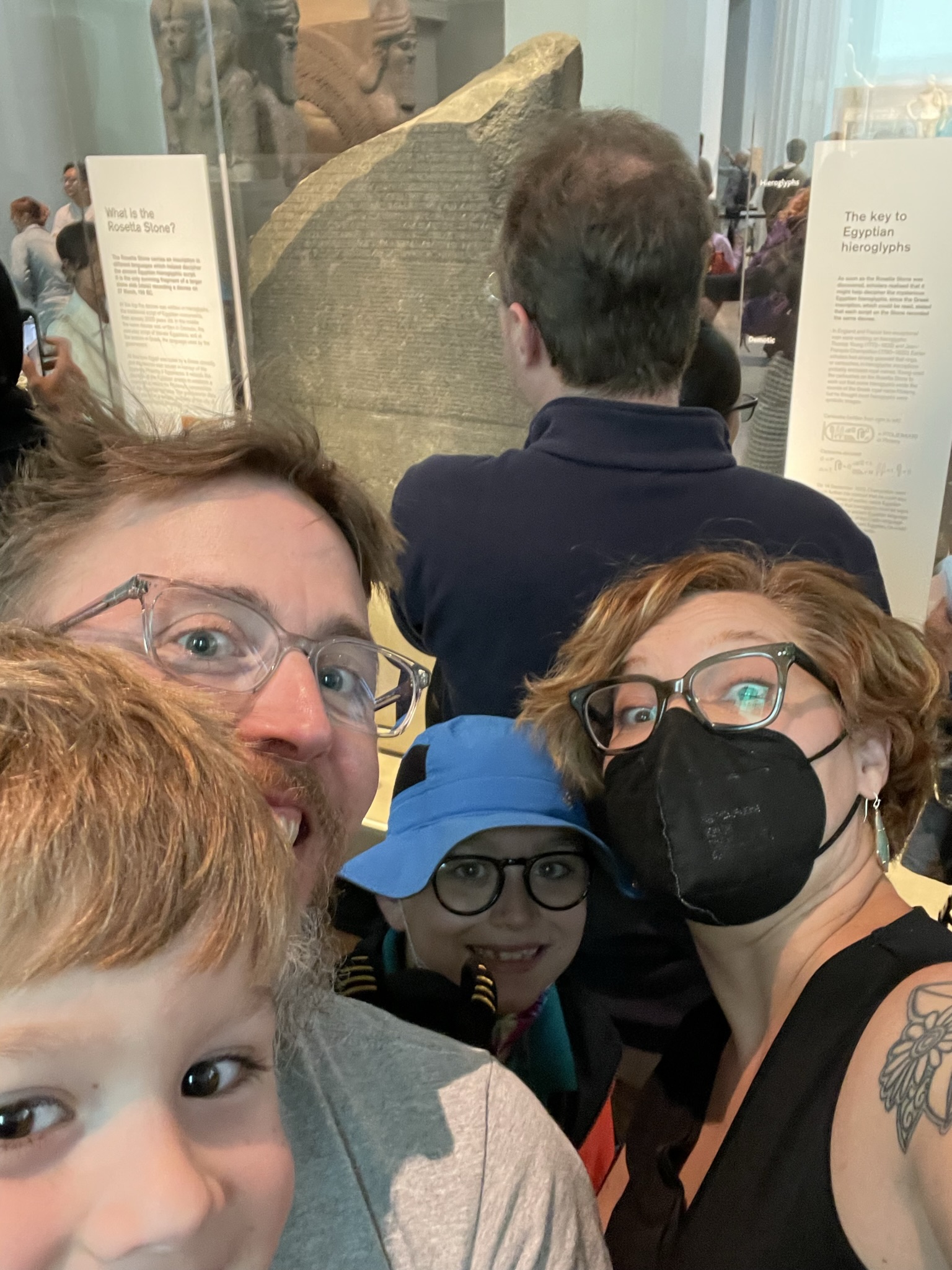
In 1799, French soldiers discovered the Rosetta Stone

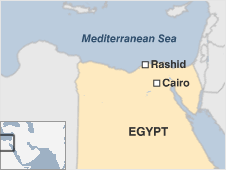
  • Found in a wall in Rashid, close to the sea
  • Immediately moved to Cairo, copies made
  • Eventually captured by the British, who brought it to London.

The Rosetta Stone

Rosetta (Rashid)

The Rosetta Stone

The Rosetta Stone: Hieroglyphs

The Rosetta Stone: Demotic
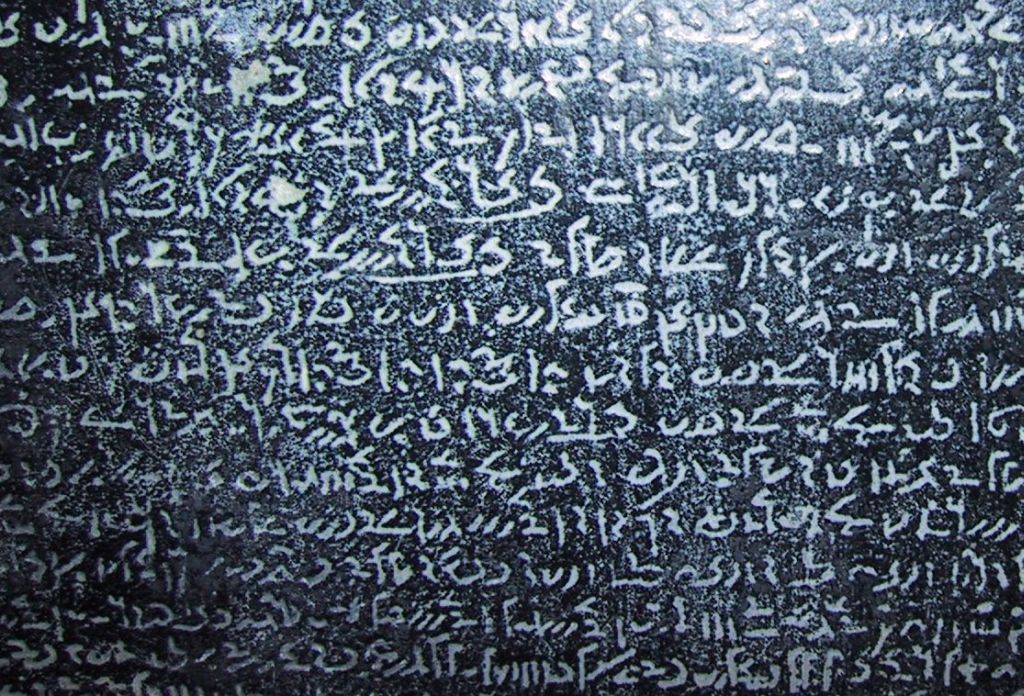
The Rosetta Stone: Greek

The Rosetta Stone

  • Records the decree requiring local priests to found a cult in honor of Ptolemy V in exchange for his past support

  • Explicitly says:

    And this decree shall be inscribed upon a stele of hard stone in sacred characters, in native characters, and in Greek characters, and shall be set up in each of the first-, second-, and third-rank temples beside the statue of the ever-living king.”

The Ptolemaic Dynasty

Remember These?

Thomas Young

Young: Ptolemy & Cleopatra

Young: Ptolemy & Cleopatra
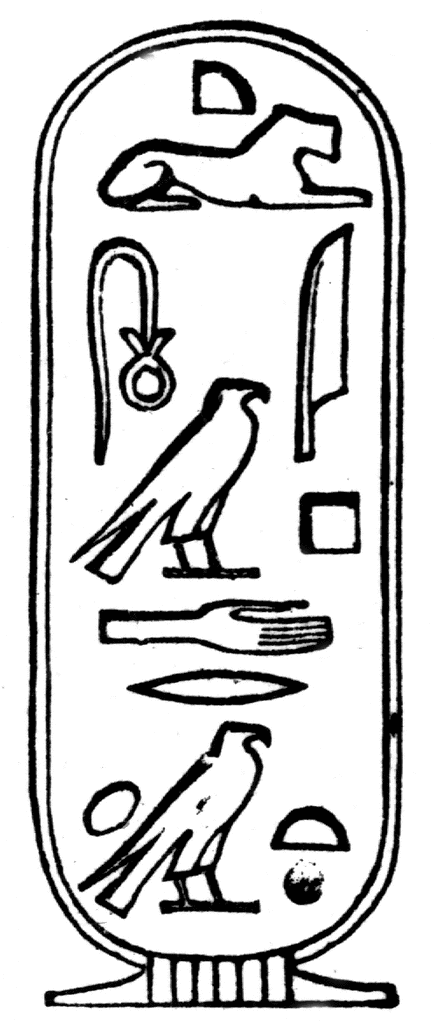
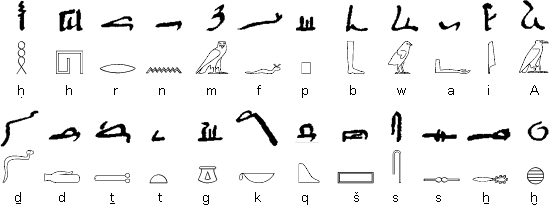
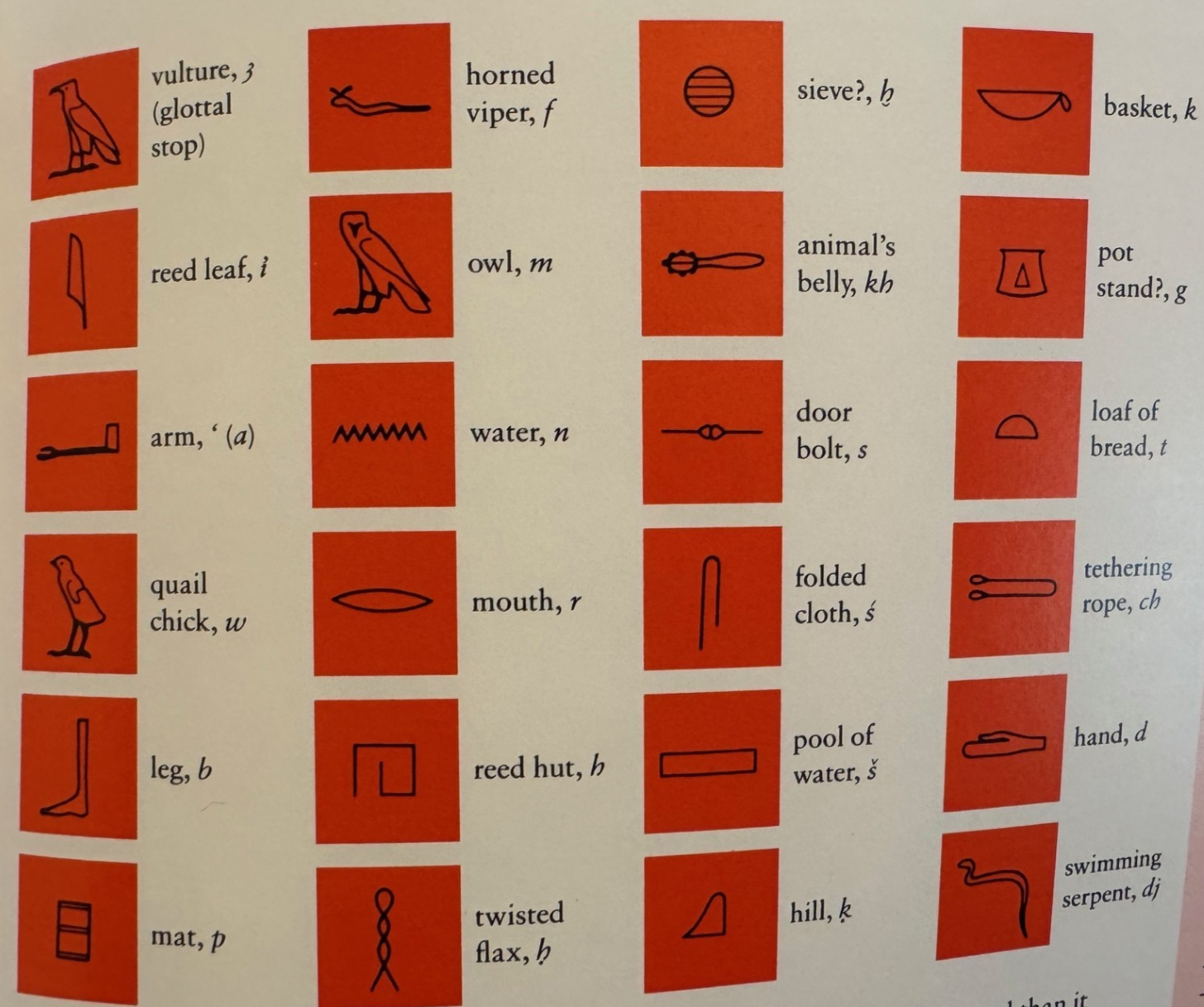
Activity: Ptolmes & Cleopatra

Follow-Up:

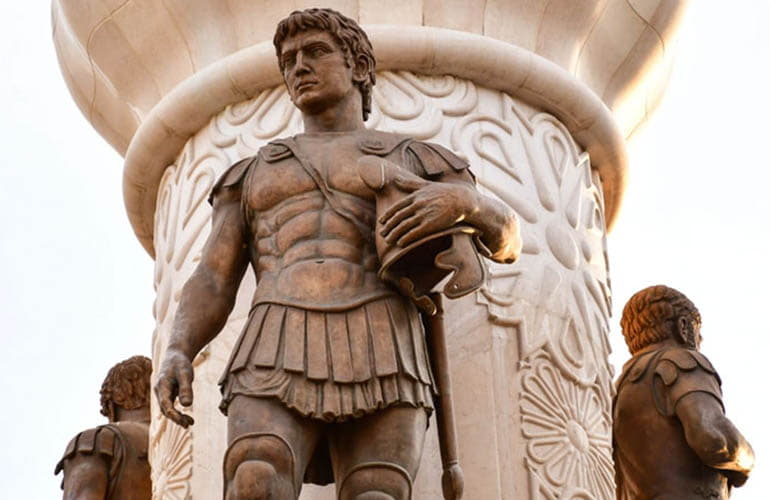
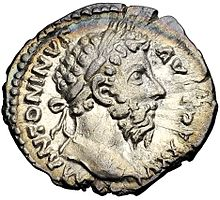
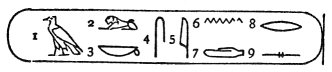
Now try to identify the name of this famous leader:
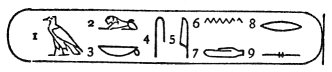
Famous Leader
Jean-François Champollion (1790-1832)
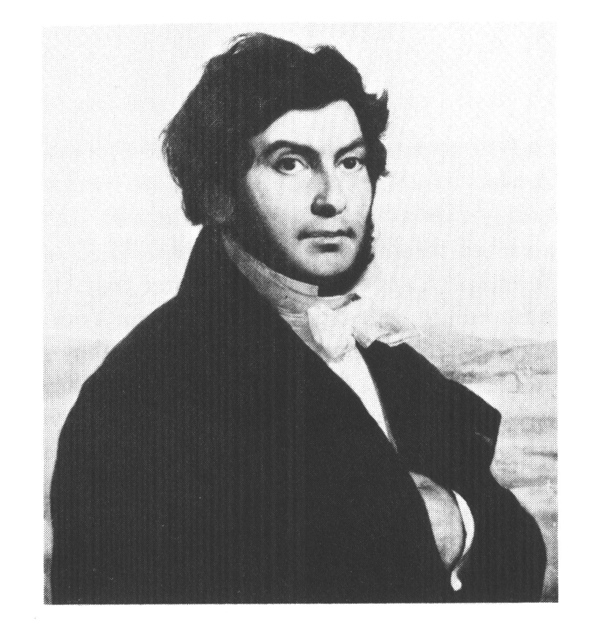
Champollion

  • Champollion took Young’s work and ran with it
    • Applied phonetic principles to other Egyptian names (e.g., Ramesses, Thutmose).
    • Used Coptic to recognize Egyptian lexical roots.

Champollion

  • He argued hieroglyphs were a mixed system:
    • Phonetic signs
    • Determinatives
    • Logograms

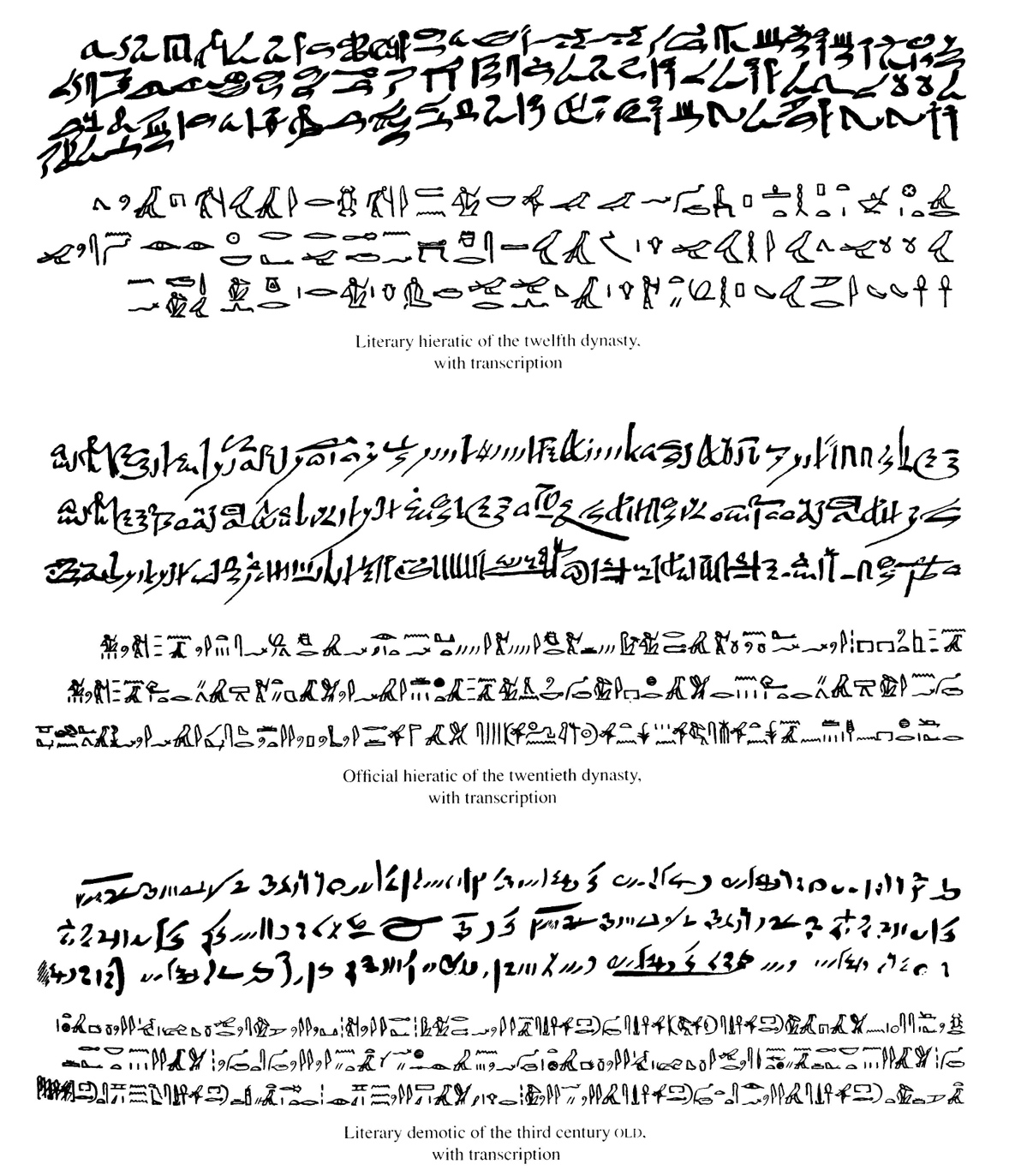
Hieratic Script

  • Pretty much from the beginning:
  • From 1st dynasty: 2925+ BCE

  • Restricted to “priestly” texts (hence hieratic)

  • Simplified & cursive, but structurally identical

Another script: Demotic

  • Two thousand years later: 650 BCE – 5th c. CE

  • Became official administrative & legal script during reign of Amasis II (ca. 550 BCE)
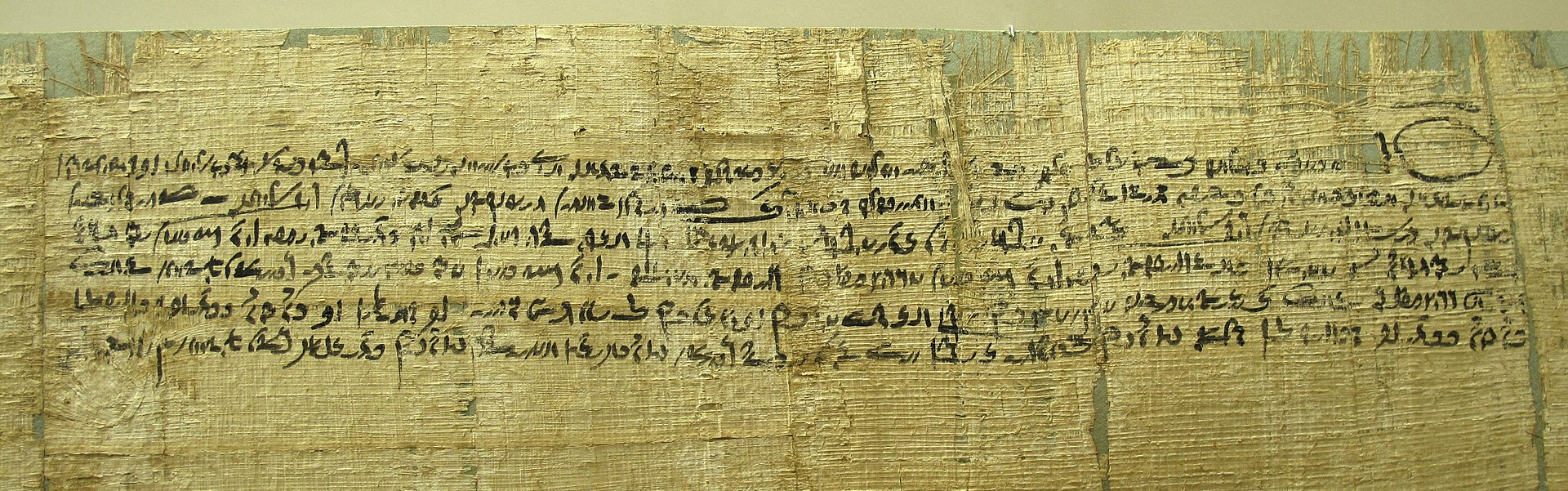
Hieratic & Demotic
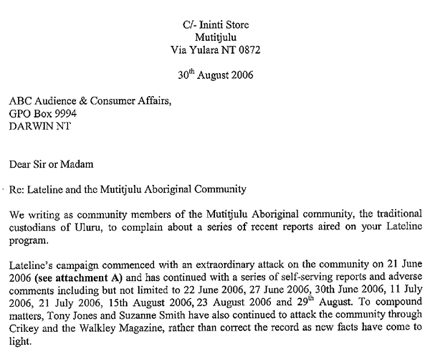
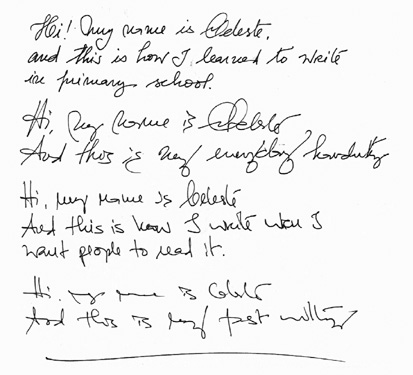
Block Font
Cursive
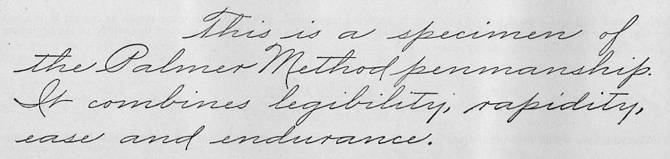
Handwriting Variants
Demise of Hieroglyphs
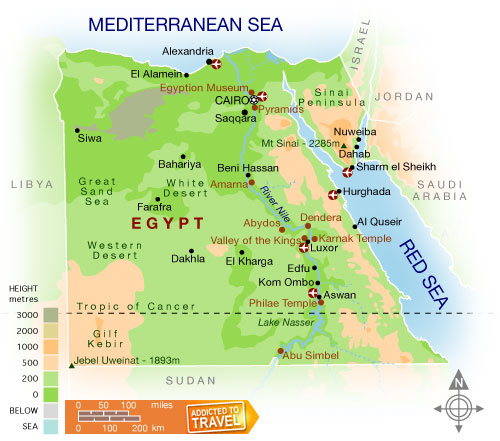
  • The last dated hieroglyphic text is inscribed on a wall of the temple of Philae, in south Egypt – 394 ce

  • Soon followed by the last known demotic text, 452 ce

Activity
Activity