Day 13: Cuneiform
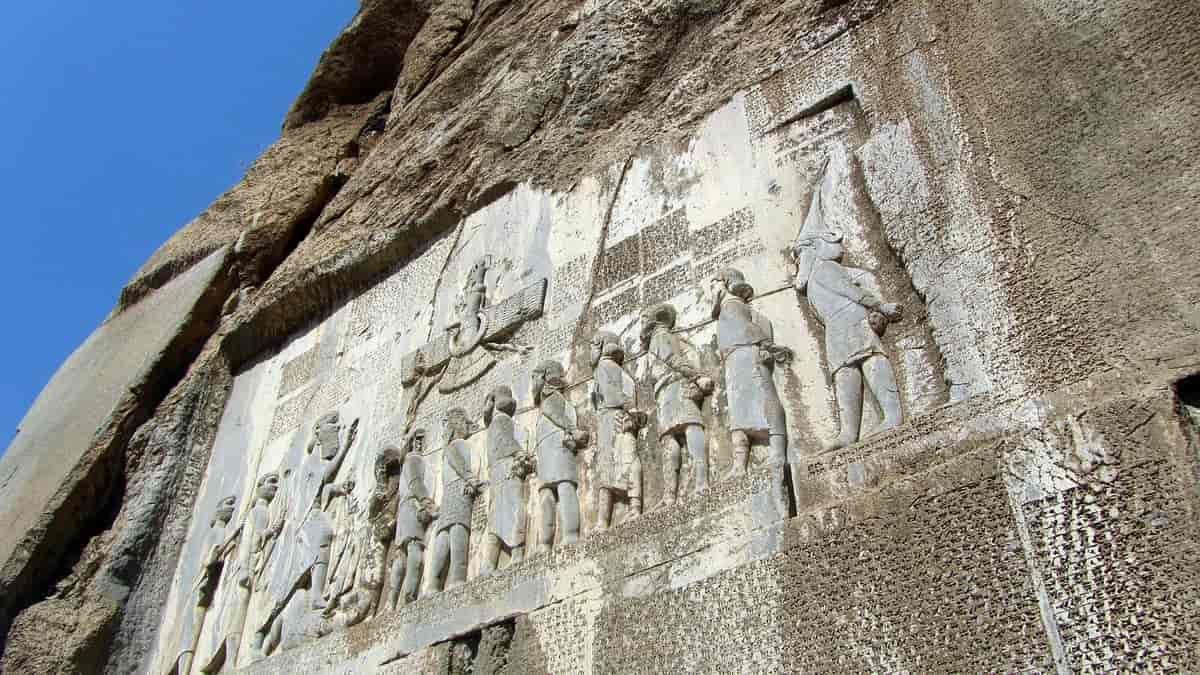
Darius’s right foot is planted firmly on the prostrate figure of Gaumata, the tenth rebel king, while the god Ahura Mazda looks on from above.
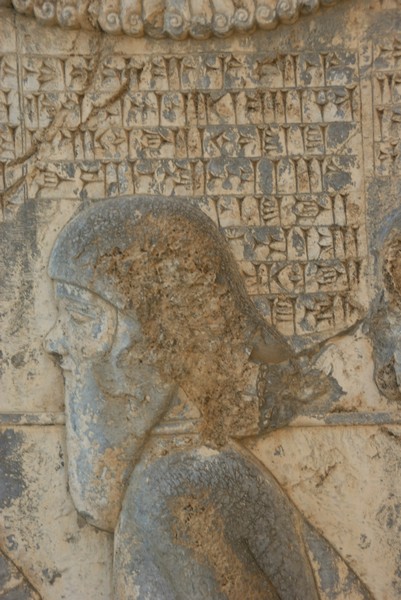
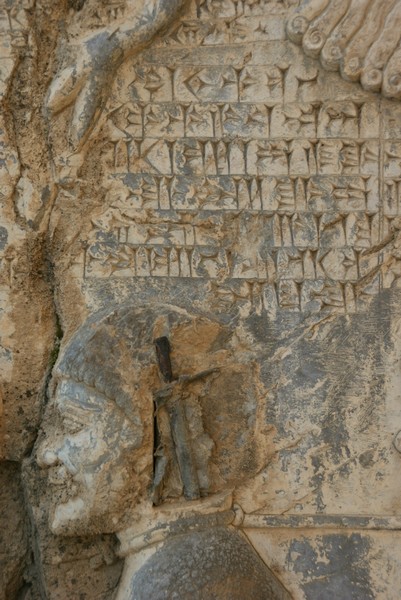
The Old Persian inscription consists of five columns surrounded by minor reliefs depicting the persons and events described in each column.
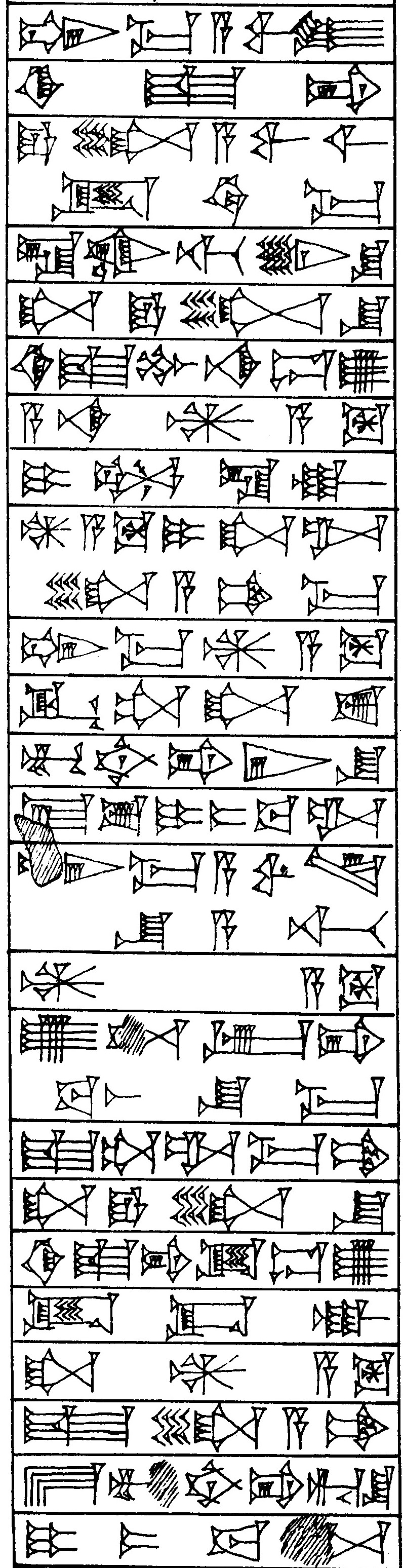
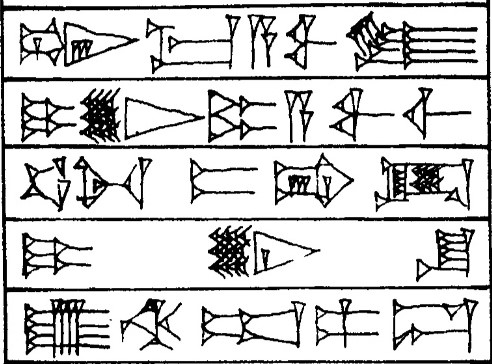
Using the key, transcript the first two lines of the Old Persian Behistun Inscription. Do you remember what it meant?
Check out this excellent article: https://inference-review.com/article/the-riddle-of-the-mountain#offcanvas-overlay-flip-slide
“I am Darius, the Great King, the King of Kings.”
adam Dârayavauš xšâyathiya vazraka xšâyathiya xšâyathiy ânâm xšâyathiya Pârsaiy xšâyathiya dahyûnâm Višt âspahyâ puça Aršâmahyâ napâ Haxâmanišiya thâtiy
Dârayavauš xšâyathiya manâ pitâ Vištâspa Vištâspahyâ pitâ Arš âma Aršâmahyâ pitâ Ariyâramna Ariyâramnahyâ pitâ Cišpiš Cišp âiš pitâ Haxâmaniš thâtiy Dârayavauš xšâthiya avahyarâ diy vayam Haxâmanišiyâ thahyâmahy hacâ paruviyata âmâtâ ama hy hacâ paruviyata \amâxam taumâ xšâyathiyâ âha th
I am Darius, the great king, king of kings, the king of Persia, the king of countries, the son of Hystaspes, the grandson of Arsames, the Achaemenid.
King Darius says: My father is Hystaspes; the father of Hystaspes was Arsames; the father of Arsames was Ariaramnes; the father of Ariaramnes was Teispes; the father of Teispes was Achaemenes.
King Darius says: That is why we are called Achaemenids; from antiquity we have been noble; from antiquity has our dynasty been royal.
Two key points:
On the next last page is one of the laws from the code of Hammurabi.
Put away your laptop, phone, etc.
Work with your neighbor and try to identify the following:
šum-ma a-wi-lum i-in DUMU a-wi-lim úḫ-tap-pí-id i-in-šu ú-ḫa-ap-pa-du
šumma awīlum īn mār awīlim uḫtappid, īššu uḫappadū.
“If a man has blinded the eye of a member of the awīlum class, his eye will be blinded.”
Identify as many symbols as you can. Hint: begin with šum-ma!
šum-ma a-wi-lum ki-iš-pí e-li a-wi-lim id-di-ma la uk-ti-in-šu ša e-li-šu ki-iš-pu na-du-ú a-na dÍD i-il-la-ak dÍD i-ša-al-li-a-am-ma
šum-ma dÍD ik-ta-ša-sú mu-ub-bi-ir-šu É-sú i-tab-ba-al
šum-ma a-wi-lam šu-a-ti dÍD ú-te-eb-bi-ba-aš-šu-ma iš-ta-al-ma-am ša e-li-šu ki-iš-pí id-du-ú id-da-ak ša dÍD iš-li-a-am É mu-ub-bi-ri-šu i-tab-ba-al
If a man laid a charge of witchcraft against a man but has not convicted him, the one against whom the witchcraft charge was laid will go to the River; he will dive into the River, and
if the River has defeated him, his accuser will take away his estate;
if the River has cleared that man and he has come out alright, the one who laid the witchcraft charge against him will be executed; the one who dove into the River will take away the estate of his accuser.
Old Persian was a fairly basic syllabary
Babylonian / Akkadian not so much
Next time: how far back can we take writing? How exactly did cuneiform come to be?